OnlyFans Mass Messaging with Segmentation and Control
OnlyFans mass messaging works best when a broadcast is treated as a campaign with an eligible audience, exclusions, approved content, a clear offer, and a measurement plan. OF.ai is designed to connect messaging workflows with fan context and approved content so teams can build more controlled campaigns without pretending software can predict exactly what every subscriber will buy.
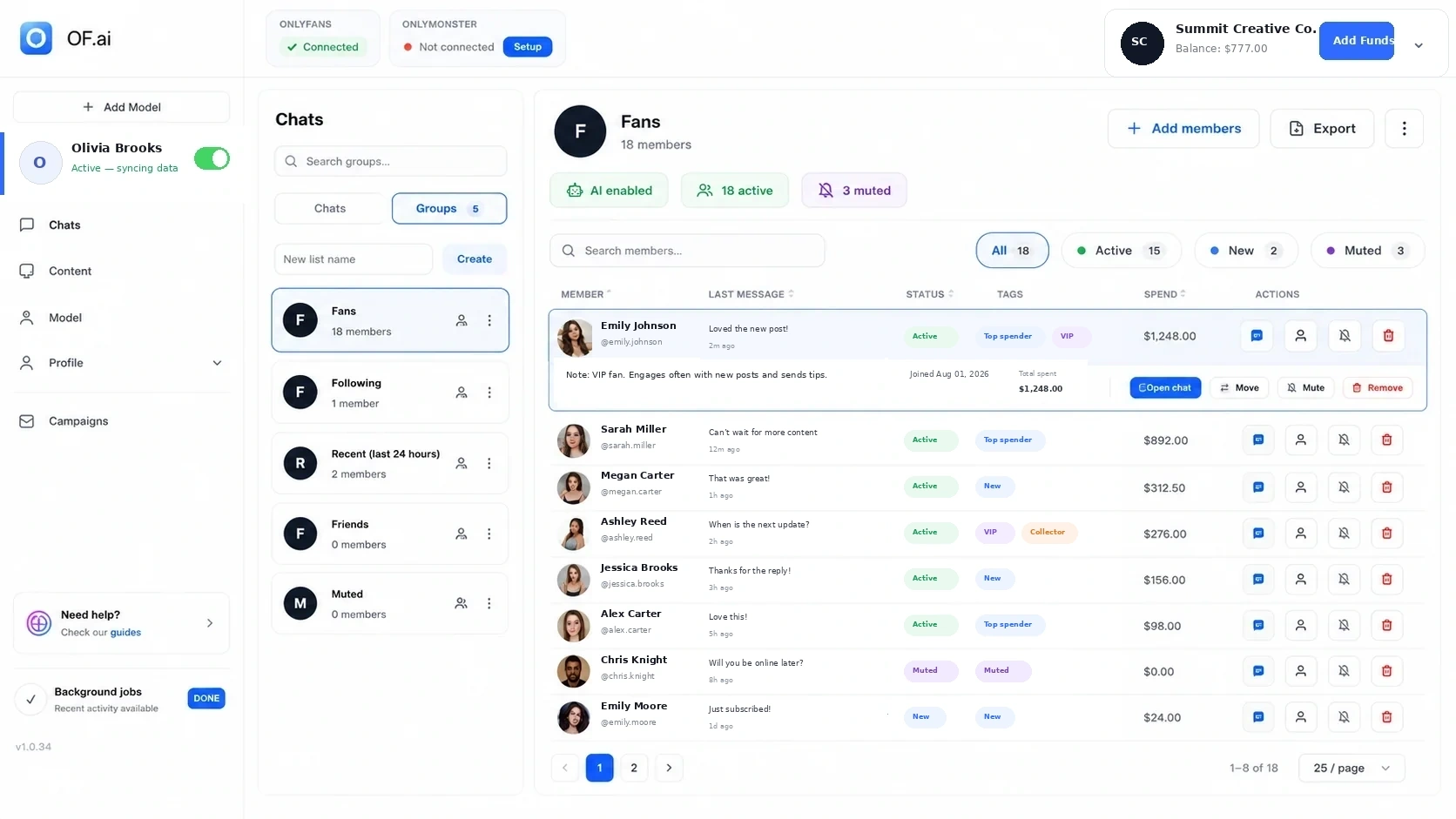
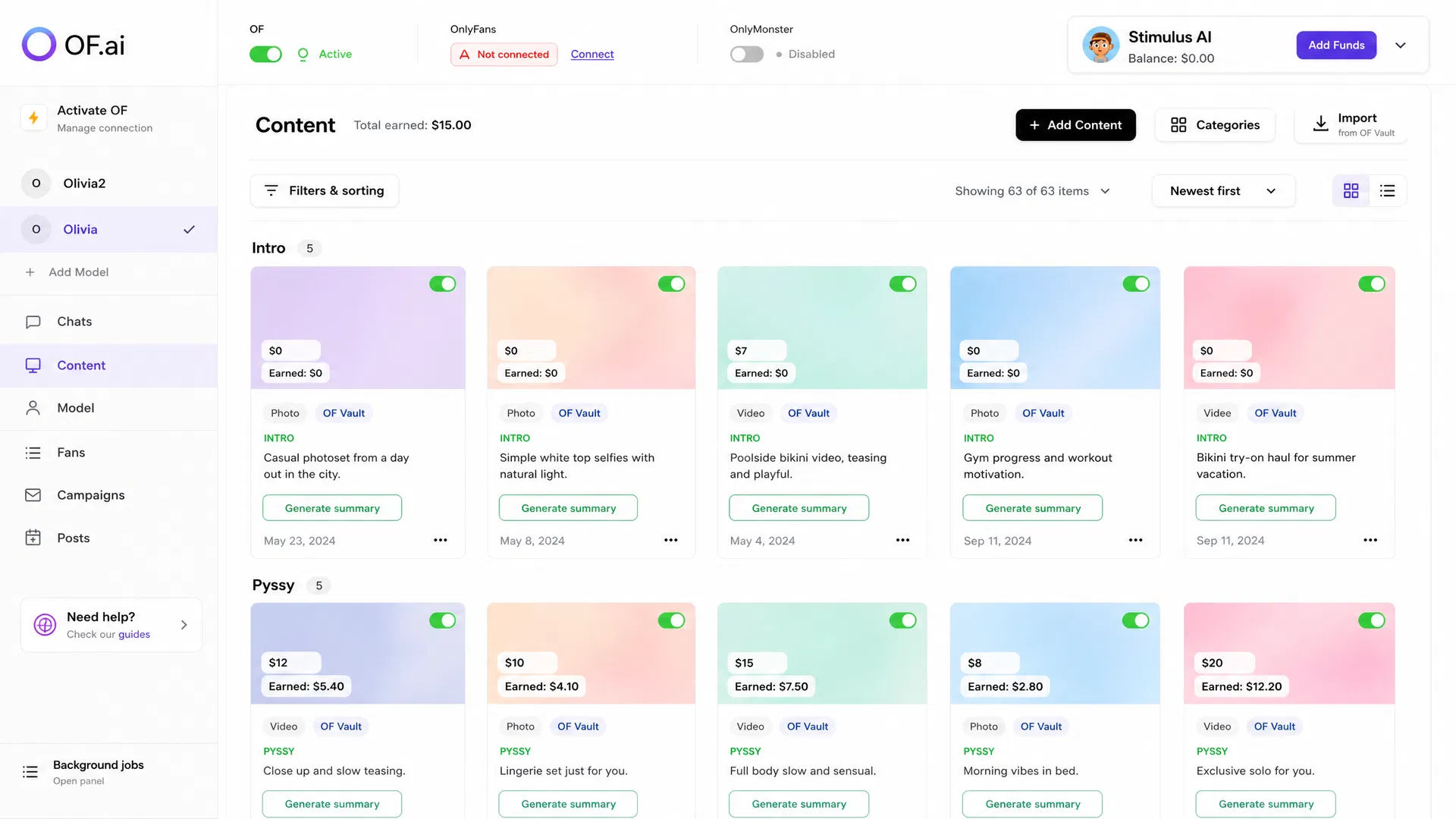
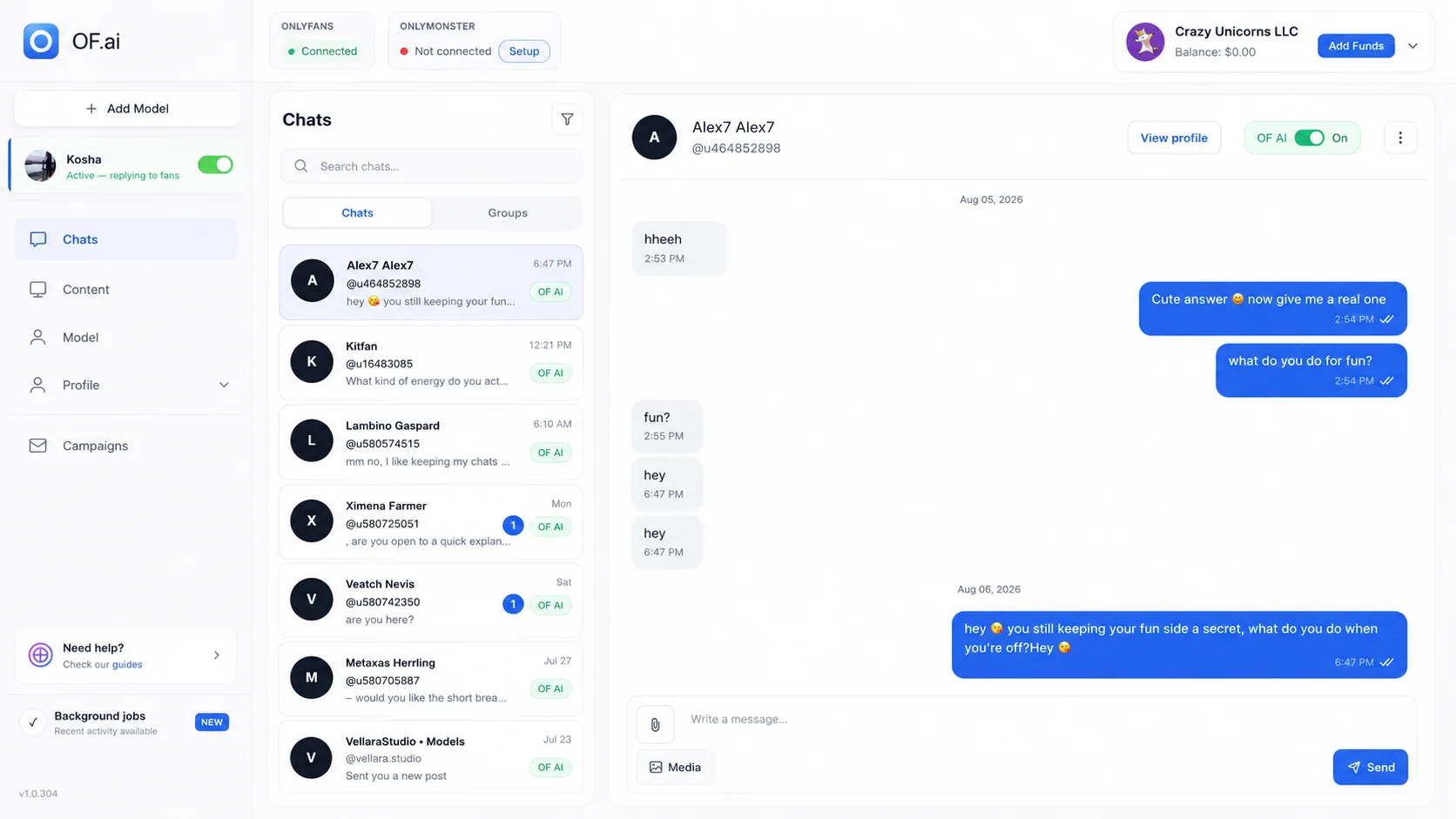
- Build segments from available fan context instead of sending every campaign to everyone
- Keep content and configured offer rules explicit before a campaign is approved
- Use exclusions to avoid obviously irrelevant or conflicting sends
- Measure replies, purchases, corrections, and follow-up workload against a baseline
Mass Messaging Is an Audience Decision Before It Is a Copy Decision
Changing the wording of a broadcast cannot fix the wrong audience. Before writing the message, define who is eligible, who should be excluded, which fan context is reliable enough to use, and what action the campaign is asking the recipient to take.
Useful segmentation can come from information the account actually has: activity, purchase history, tags, previous conversations, stated content preferences, or whether a fan already received or purchased a related offer. Those signals are context, not proof of future spend or future intent.
Build Segments and Exclusions You Can Explain
Keep the segment definition inspectable. An operator should be able to explain why a fan was included without relying on a hidden prediction score. If the integration does not expose a reliable signal, do not invent one to make the segment appear more sophisticated.
- Recent or inactive fans when activity data is available
- Fans with relevant purchase history or content tags
- Fans who stated a preference in conversation
- Fans who already purchased the promoted item or a conflicting offer
- Manual exclusion lists for VIP, sensitive, or operator-managed conversations
- Model-specific groups that keep one creator's audience and content separate from another's
Content, Offer, and Price Controls Come Before Send
A campaign should reference only content that is approved and available for the intended workflow. Keep descriptions, categories, eligibility, and configured prices explicit so the message does not promise an item or number that the account cannot support.
Avoid per-fan price claims based on supposed future spend unless the account has an explicit, permitted pricing rule that the team can inspect. Historical spending can help an operator understand context, but it does not prove what a fan will pay next.
- Select approved content or a clearly defined non-content CTA
- Use the current configured price rather than a number generated from chat history
- Exclude recipients who should not receive the offer
- Review the final audience, copy, content, and offer together before send
A Reviewable Campaign Workflow
Treat each mass message as a small operating cycle: define the audience, select approved content, draft the message, review exclusions, approve the campaign, observe replies, and decide what follow-up is appropriate. The follow-up should be another configured workflow, not an automatic promise to resend until a fan buys.
If AI is used to draft variants, keep the allowed variation narrow enough that a reviewer can understand what changed. Personalization should come from reliable context and explicit rules, not from claiming that the system knows a subscriber's private motivation.
- Audience definition and exclusion review
- Approved copy or bounded AI-assisted variants
- Approved content and configured offer rules
- Human approval before wider campaigns
- Reply routing and takeover for conversations that need judgement
- Measured follow-up based on campaign outcomes and account policy
What to Measure After a Mass Message
Record the campaign definition and compare it with similar campaigns over time. Do not attribute every change in revenue or retention to one mass message when content, pricing, seasonality, traffic, and other conversations changed at the same time.
| Signal | What it tells you | Caution |
|---|---|---|
| Eligible audience | How large the defined segment actually was | A larger audience is not automatically a better campaign |
| Replies | Whether the message generated conversation | A reply is not the same as a purchase |
| Offer purchases or unlocks | Commercial outcome when the integration exposes it | Compare similar offers and cohorts before drawing conclusions |
| Corrections or complaints | Where targeting or copy may have missed the mark | Review qualitative context, not only the count |
| Manual takeovers | How much operator judgement the campaign created | Include takeover work when evaluating automation workload |
| Follow-up workload | How much additional work the campaign generated | A campaign can increase activity without reducing operating effort |
FAQ
How is this different from sending the same mass message to every fan?
The workflow starts by defining an eligible audience and exclusions, then connects the campaign to approved content and explicit offer rules. The goal is controlled segmentation, not a claim that every fan receives a perfectly predicted message.
Can OF.ai personalize mass messages?
AI-assisted variants can use reliable fan context and configured rules when that context is available. Keep personalization bounded and reviewable; do not assume spending history proves future intent or future spend.
Can I exclude fans from a campaign?
Campaign planning should support clear eligibility and exclusion rules, including manual exclusions for conversations your team wants to keep under direct operator control. Verify the exact integration behavior in your deployment before a live send.
Should every segment get a different price?
Not by default. Use explicit prices and account rules that your team can inspect. Do not generate a price from a hidden prediction of what an individual fan might pay.
What should I measure after a campaign?
Measure the eligible audience, replies, available purchase or unlock outcomes, corrections, complaints, manual takeovers, and follow-up workload. Compare similar campaigns rather than relying on a universal conversion benchmark.
Can AI automatically resend to non-buyers?
Follow-up should be a configured workflow with frequency, eligibility, and stop conditions that your team approves. Avoid an open-ended resend loop and keep manual control for fans or situations that need judgement.
How should an agency test mass messaging automation?
Start with one model and a clearly defined segment, document the current campaign baseline, review the audience and offer manually, then compare replies, purchases when available, corrections, and follow-up workload before expanding.
AI Chatter for OnlyFans.
Start free. Stay free.
Let AI chat with your fans 24/7 using your persona and tone of voice. Keep human control and upgrade only when you want AI selling. Free on the first model of your account; additional models use AI Sexter.