OnlyFans CRM for Fan Context Your Chat Team Can Actually Use
A CRM is useful only if the information changes what your team does next. If fan notes, tags, purchase context, and conversation history live away from the inbox, chatters still have to guess or search before replying. OF.ai keeps available fan context close to the conversation so operators and supervised AI can use the same information for follow-up, segmentation, content discovery, and escalation.
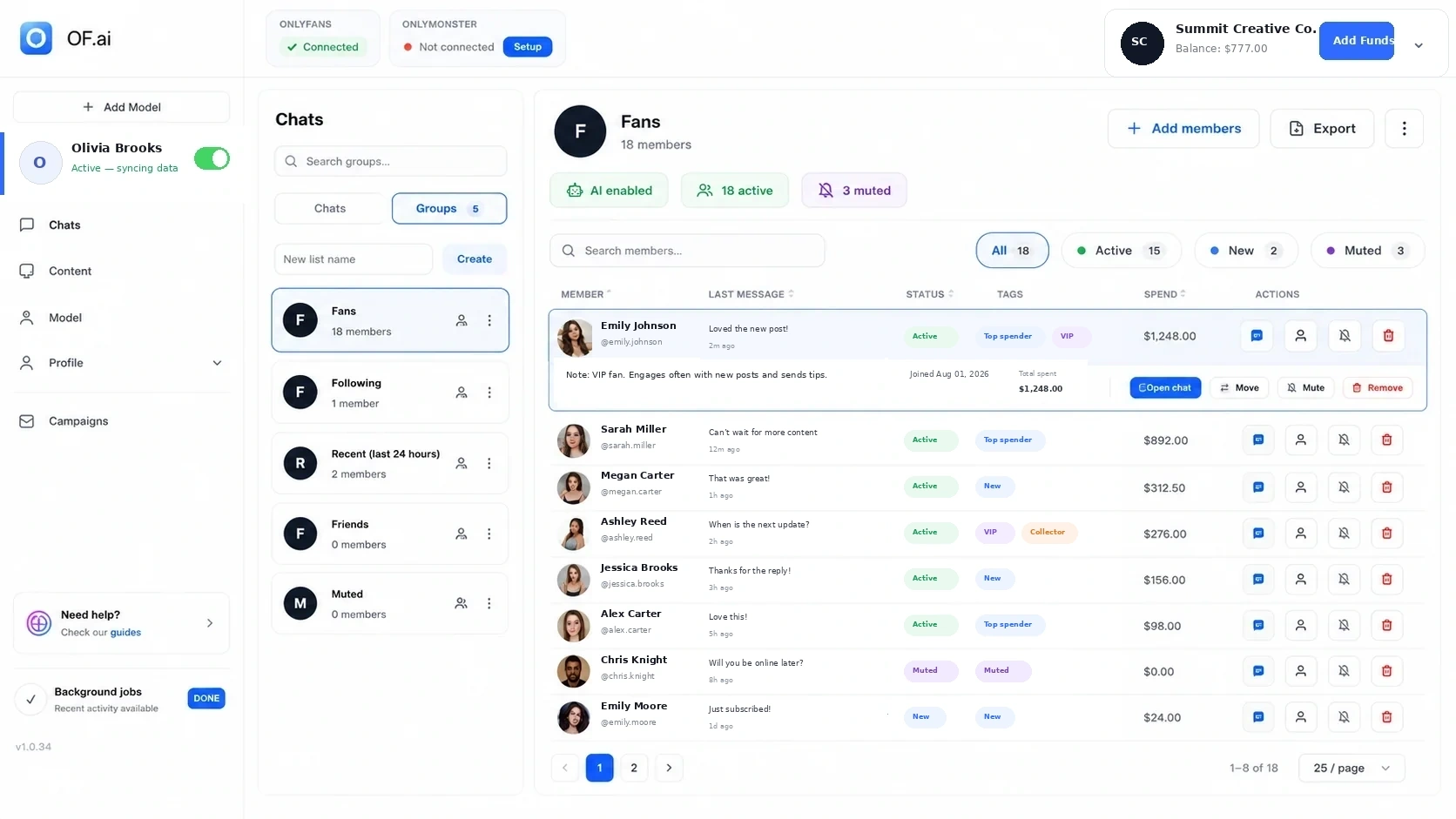
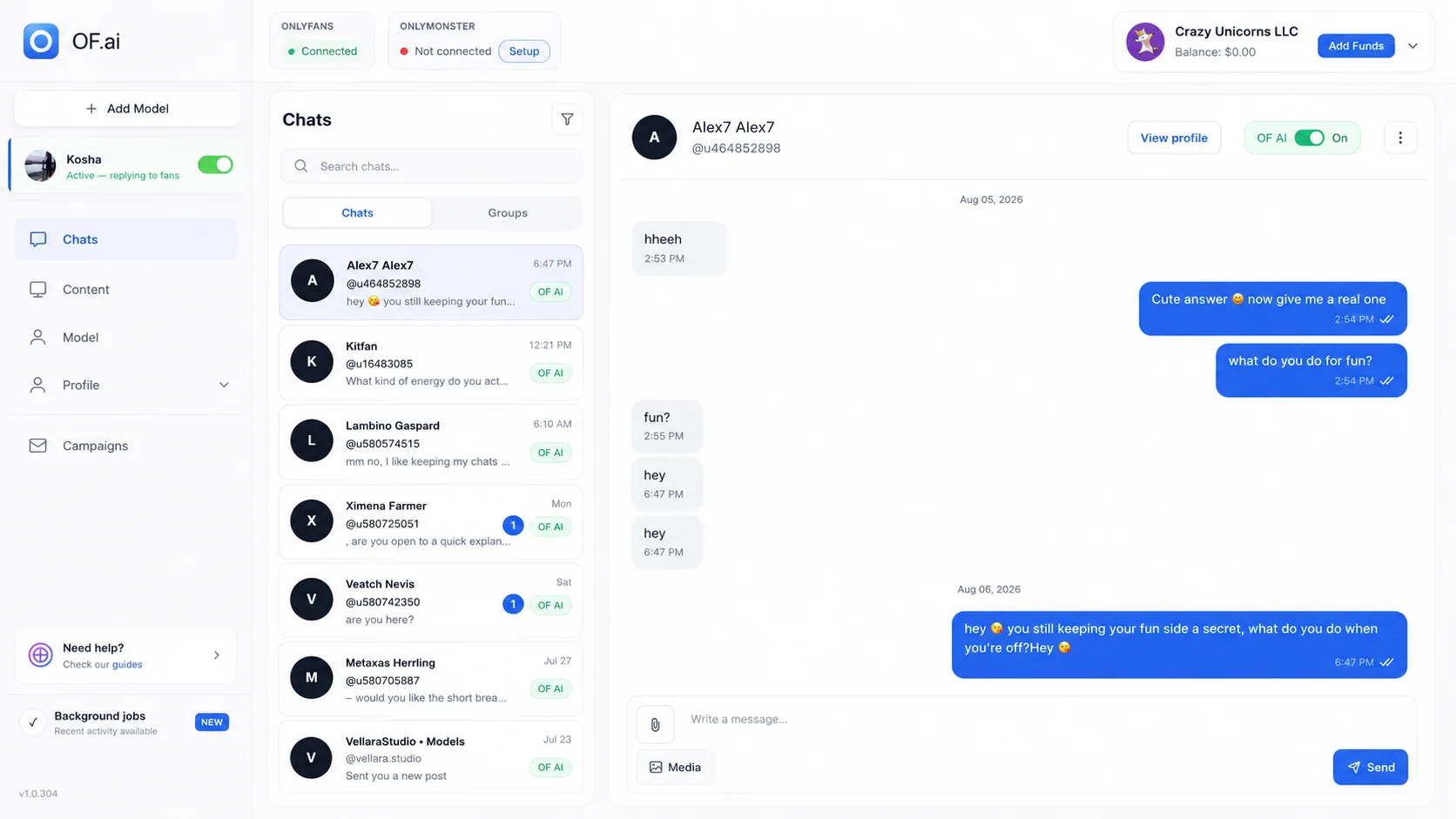
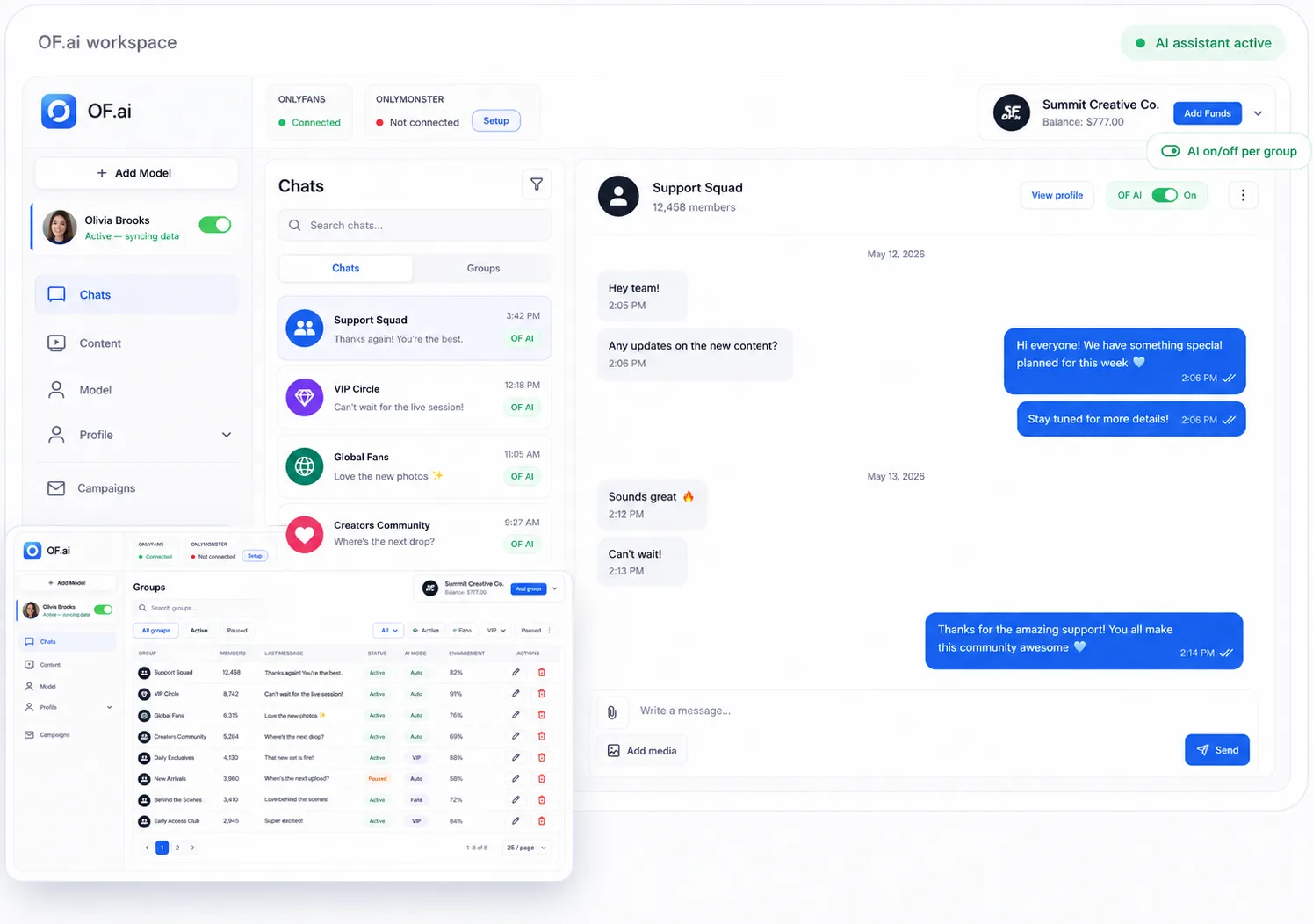
- Keep fan context next to the conversation instead of in a separate spreadsheet or note trail
- Use tags and available history to organize follow-up without treating a segment as proof of intent
- Give operators and supervised AI the same creator-specific context and boundaries
- Measure whether better context reduces searching, missed follow-ups, and avoidable corrections
A Fan Profile Should Help the Next Conversation
The useful question is not how many fields a CRM stores. It is whether the operator can understand the relationship quickly enough to make the next message more relevant and avoid repeating questions or losing context after a handoff.
Where the connected integration exposes them, conversation history, tags, purchases, and stated preferences can stay attached to the fan workflow. Teams should still treat those signals as context rather than as certainty about what somebody will buy next.
What the Team Can Organize Around
- Conversation history and the current thread
- Tags and segments created for the team's operating workflow
- Available purchase history and content interactions
- Stated preferences and notes captured from conversations
- Follow-up or re-engagement workflows defined by the team
- Human-only handling for fans or situations that should not be automated
CRM Context Is Most Valuable Inside Chat
A profile that requires a separate lookup adds friction at the moment the team is trying to answer. Keeping fan context beside chat shortens the path from 'who is this?' to a reviewed response, and it makes handoffs easier because the next operator starts from the same history.
The same principle applies to AI assistance. Context can inform a configured workflow, but a human should be able to see the thread, take over, and correct the rules if the assistant uses that context poorly.
Use Segments for Workflow, Not for Assumptions
Segments are useful for organizing work: who needs follow-up, which fans match a campaign rule, or which conversations should remain manual. They are less useful when a label is treated as a guarantee of purchase intent.
Build segments from data you actually have, keep the rule understandable to operators, and compare campaign or follow-up results with your own baseline before making the segment broader.
What to Measure in a CRM Pilot
| Signal | Question | Useful decision |
|---|---|---|
| Context lookup | How often does an operator leave the thread to find fan information? | Whether the CRM is reducing tool switching |
| Missed follow-ups | Are defined follow-up workflows being completed? | Whether ownership or segmentation needs work |
| Corrections | Did missing or wrong context cause an avoidable reply problem? | Which data or workflow rules need improvement |
| Handoffs | Can the next operator understand the relationship without reconstructing it? | Whether shared context is sufficient |
| Commercial outcomes | Do the segments and follow-ups help the measures you already use? | Whether to expand the workflow |
The Minimum Useful Fan Record
A useful CRM record is not the one with the most fields. It is the smallest set of reliable context that helps the next operator understand the relationship, choose the correct workflow, and know who owns the next action.
| Record | Operational use | Do not assume |
|---|---|---|
| Conversation summary | Avoid repeating questions and recover context after a handoff | That an old preference is still current |
| Stated preferences | Narrow relevant content or follow-up rules | That a preference guarantees purchase intent |
| Available purchase history | Avoid duplicate offers and understand prior interactions | That past spend predicts future spend |
| Tags or segments | Route fans into defined queues or campaigns | That a label is a hidden score |
| Next action and owner | Make follow-up responsibility explicit | That automation should continue without a stop rule |
| Automation status | Show whether the thread is manual, supervised, or eligible for a workflow | That every fan should use the same mode |
Data Hygiene Matters More Than Adding More Fields
Context becomes harmful when nobody knows where it came from or whether it is still current. Keep operator-entered notes, imported account data, and observed conversation facts distinguishable enough that a reviewer can challenge stale or conflicting information.
- Record the source of important context when the distinction matters
- Prefer dated or recent observations over permanent labels for changing preferences
- Separate what a fan explicitly stated from what an operator inferred
- Remove or correct stale notes that repeatedly create bad follow-ups
- Keep ownership and next action visible so a segment does not become an orphaned list
Turn Segments Into Queues with Owners and Stop Conditions
A segment becomes operational only when it has a defined action. For each group, specify who owns it, what the workflow is allowed to do, and what event removes a fan from the queue. This prevents a useful filter from turning into an endless sequence of automated follow-ups.
Examples include a re-engagement queue that stops after a reply, a campaign audience that excludes prior purchasers, or a manual-review queue that clears only after an operator resolves the exception.
FAQ
What fan data can the CRM use?
That depends on what the connected integration exposes and what your workflow stores. Typical context can include conversation history, tags, available purchase history, stated preferences, and team notes. Verify the fields available in your deployment.
Can chatters see fan context while replying?
The workflow is designed to keep relevant fan context close to the conversation so an operator does not have to reconstruct the relationship from a separate system.
Can AI use the same fan context?
Configured AI workflows can use available context, but context is not proof of intent. Keep review and human takeover available, especially while the workflow is being tuned.
Is segmentation the same as predicting who will buy?
No. Segmentation organizes fans using rules and data you have. It does not guarantee future behavior. Measure campaign and follow-up performance against your own baseline.
How should an agency test the CRM?
Start with one model and a few operational segments. Track tool switching, missed follow-ups, handoff quality, corrections, and the commercial metrics your team already trusts.
What should the CRM never infer automatically?
Do not treat tags, past purchases, or historical activity as proof of what a fan will do next — future intent, budget, or churn. Use observable data to organize work, keep the rule explainable, and validate any segment against your own outcomes.
Next step
Connect One Model and Test the Fan Workflow
Connect one model, keep human review on, and test this workflow against your own baseline.