OnlyFans PPV Automation Without Losing Control of the Offer
The expensive part of PPV operations is not only sending a message. Teams repeatedly search for the right asset, check what can be offered, choose the configured price or rule, remember what happened in the conversation, and decide whether to follow up. OF.ai puts approved content, fan context, configured offer rules, conversation stages, and human review in one workflow so an agency can automate the repeatable steps without turning every fan into the same broadcast.
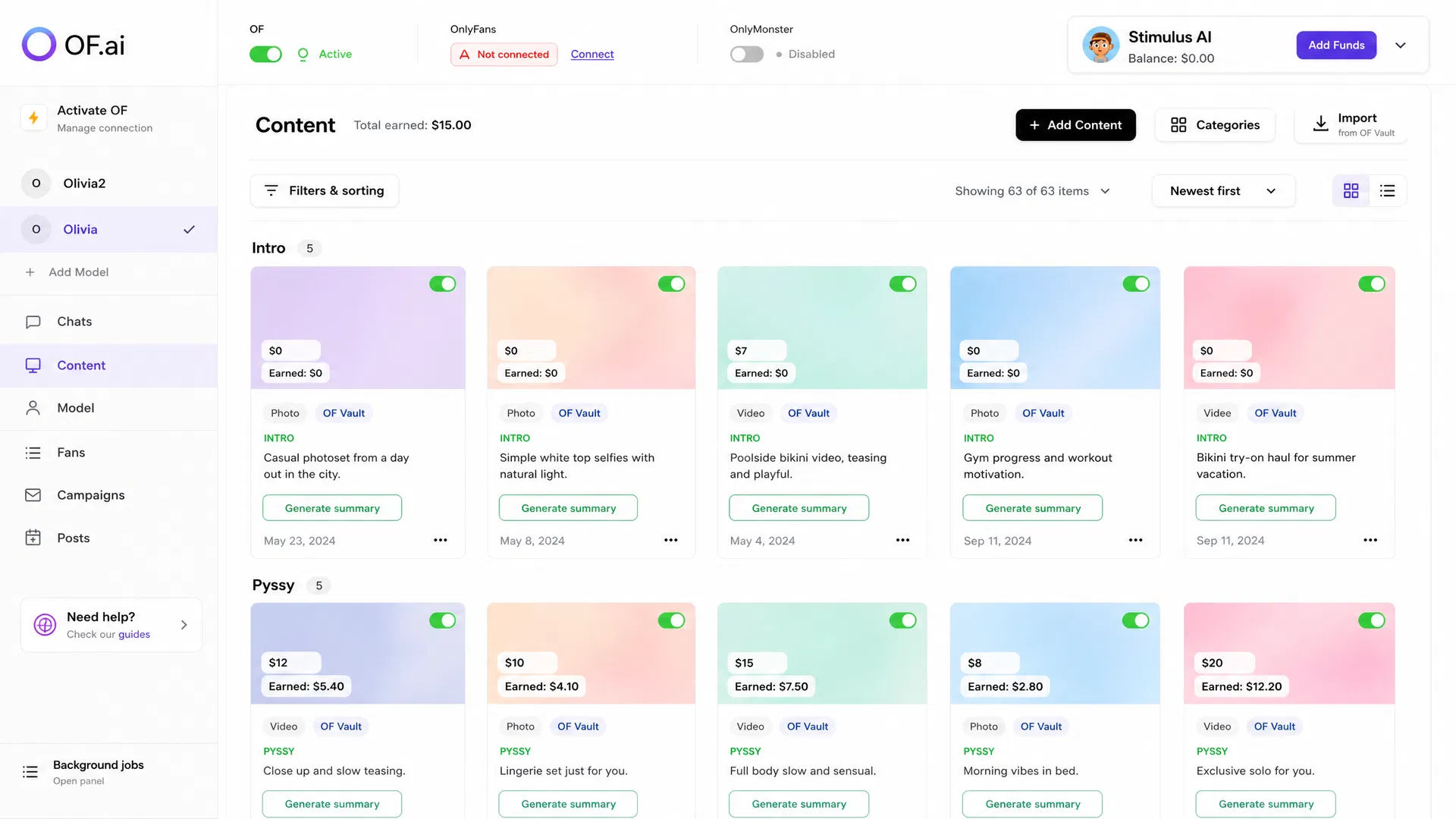
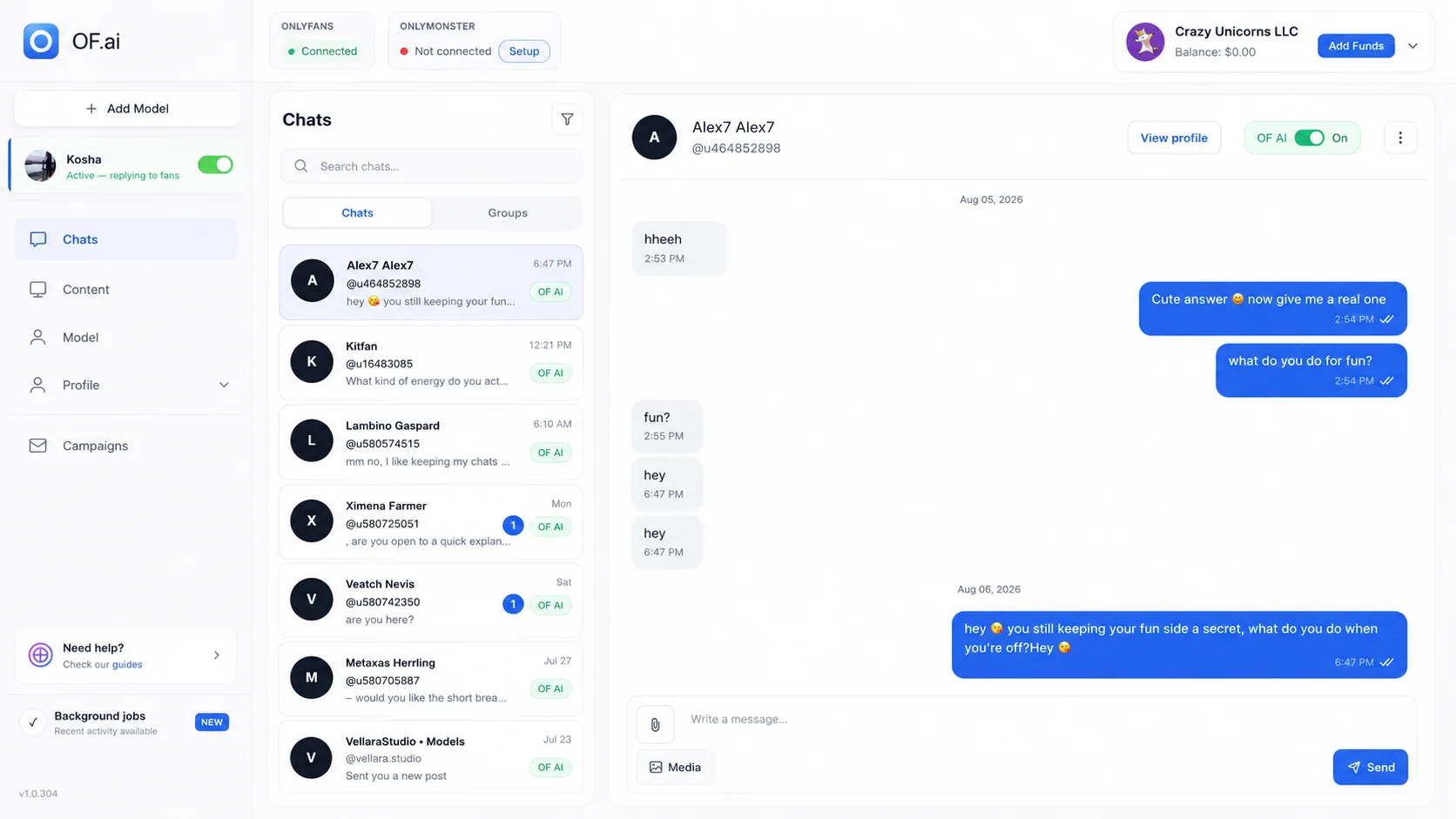
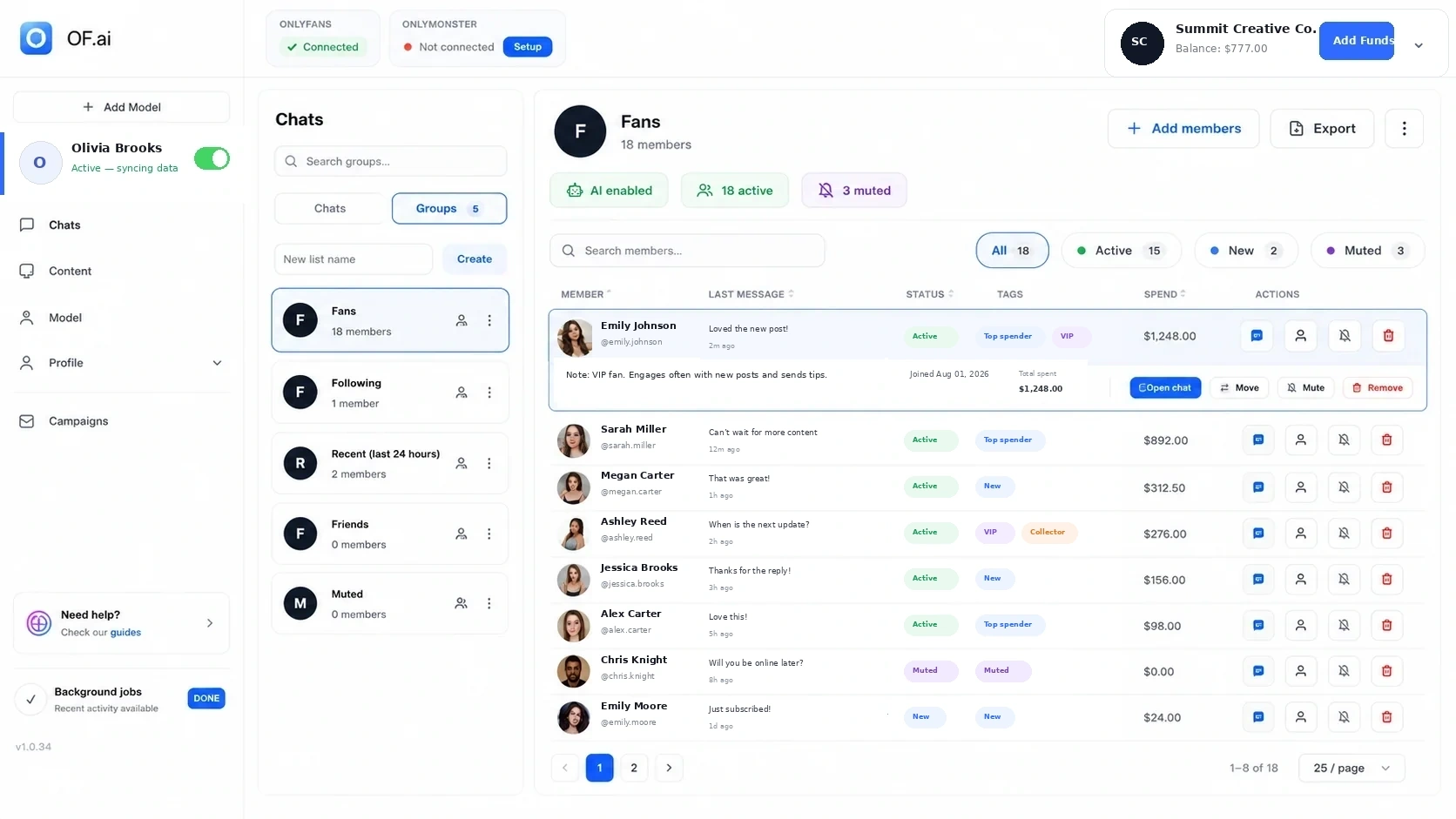
- Keep approved content and its metadata available inside the conversation workflow
- Use configured offer rules and available fan context instead of letting AI invent a price or asset
- Review, correct, or take over a conversation when the situation needs judgement
- Pilot one model and compare offer errors, follow-up coverage, review load, and your existing sales metrics
The PPV Bottleneck Is Usually Coordination
A busy operator has to combine several pieces of information before an offer: which content is approved, how it is described, what price or rule applies, what the fan has already seen, and whether the conversation is at the right stage for an offer at all.
When those pieces live in different tools or in a chatter's memory, scale creates mistakes. A structured PPV workflow makes the decision path visible and gives the team a place to correct the rules rather than relying on another reminder in a group chat.
What the Workflow Can Coordinate
- Approved photos and videos with the metadata your team maintains
- Configured pricing or offer rules rather than AI-invented prices
- Conversation stage and available fan context before an offer is considered
- Follow-up instructions defined by the team
- Human takeover for unusual, sensitive, or high-value conversations
- Review of corrections before broader automation
Avoid the Two Expensive PPV Errors
The first error is using the wrong asset or an asset outside the intended workflow. The second is letting a system improvise an offer your team did not configure. Both are easier to prevent when approved content and offer rules are explicit inputs rather than hidden assumptions.
Keep content metadata current, make pricing rules inspectable, and review the first live conversations. If corrections repeat, change the underlying rule before increasing automation coverage.
A One-Model PPV Pilot Scorecard
| Signal | Record | Decision |
|---|---|---|
| Content errors | Wrong, unavailable, or unsuitable assets caught in review | Whether library metadata or permissions need work |
| Offer corrections | Price, wording, or stage changes made by operators | Whether configured offer rules are clear enough |
| Follow-up coverage | Defined follow-ups completed or missed | Whether the workflow is improving consistency |
| Human takeovers | Conversations moved to an operator and why | Which situations should stay manual |
| Commercial outcomes | The PPV purchase and revenue measures you already use | Whether the workflow is useful enough to expand |
Personalization Should Come From Context, Not Guesswork
Available fan history, tags, purchases, and stated preferences can help select a configured workflow or narrow which approved content is relevant. They do not guarantee that a fan wants to buy or that a particular moment is optimal.
Treat personalization as a testable operating rule. Compare results with your existing process and keep human review available until the workflow behaves consistently on real conversations.
A PPV Decision Path Before the Send
Before a workflow sends or proposes a PPV offer, the team should be able to trace the decision through a small number of explicit checks. This reduces the risk that an asset, price, or follow-up rule is chosen because of an opaque assumption.
| Check | Question before the offer |
|---|---|
| Eligibility | Is this fan eligible for the configured workflow or manually excluded? |
| Asset | Is the content approved, available, and correctly described for this creator? |
| Offer rule | Which configured price or offer rule applies? |
| Conversation stage | Is the thread at a stage where this offer is allowed? |
| Prior exposure | Has the fan already received or purchased the same or conflicting item where that context is available? |
| Manual boundary | Does this conversation require an operator before any offer continues? |
Log the Outcome of the Offer, Not Just the Send
A send event alone cannot tell the team whether the PPV workflow was useful. Where the integration exposes the data, keep the offer context close enough to the conversation that a reviewer can see what happened after the message and whether a follow-up should still be eligible.
- Which approved asset and configured offer rule were used
- Whether the fan replied and what conversation stage followed
- Purchase or unlock outcome where the source exposes it
- Any operator correction to asset, price, wording, or eligibility
- Whether a human takeover ended or changed the automated workflow
- Whether the configured follow-up remained eligible or hit its stop condition
Separate Workflow Errors from Offer Strategy
Wrong content, a stale configured price, duplicate eligibility, or a missed stop condition is a workflow error. A correctly executed offer that simply performs poorly is a different problem: the audience, creative, value proposition, or pricing strategy may need review.
Keep those categories separate in the pilot. Otherwise a team can spend time changing AI instructions to compensate for a weak offer, or change the offer when the real problem was an incorrect workflow input.
FAQ
Does OF.ai invent PPV prices?
The workflow should use pricing or offer rules configured by the team. Do not rely on an AI model to invent prices. Review your configuration during the pilot.
How does it know which content can be offered?
Use the approved content library and the metadata or permissions your team maintains. Review early conversations to catch missing or ambiguous content rules before expanding automation.
Can I keep certain PPV conversations manual?
Yes. AI control is per fan and a human can take over a thread, so unusual, sensitive, or high-value conversations can stay manual.
Does fan context guarantee a better conversion rate?
No. Context can make a configured workflow more relevant, but conversion depends on the audience, content, offer, timing, pricing, and implementation. Compare the pilot with your own baseline.
What should I measure before expanding?
Track content errors, offer corrections, follow-up coverage, takeovers, review workload, and the PPV commercial metrics your team already uses.
How do I prevent repeated or conflicting PPV offers?
Use explicit eligibility, prior-purchase or prior-offer context where available, configured follow-up rules, and clear stop conditions. Review duplicates during the pilot and fix the underlying rule before widening automation.
Next step
Connect One Model and Test the PPV Workflow
Connect one model, keep human review on, and test this workflow against your own baseline.