OnlyFans Agency vs Software: Choose the Operating Model You Actually Need
An agency and software are not interchangeable products. An agency can provide people, management and execution; software can structure repeatable work, keep context together and automate selected stages under rules. The useful decision is which responsibilities you want another team to own, which responsibilities you want to keep internally, and whether software can reduce the operating work around them. Compare that before comparing a percentage, retainer or subscription line.
- List the responsibilities you want to outsource before comparing price models.
- Separate work software can structure or automate from work that still needs a person or service team.
- Run one creator workflow side by side before replacing an agency relationship or internal team.
Compare Responsibilities Before You Compare Price
An agency fee may cover a bundle of activities that software does not provide: recruiting and scheduling people, creator management, content planning, account operations, reporting, or other services defined by the agreement. A software subscription may support chat, fan context, content and workflow automation while leaving those broader responsibilities with the creator or an internal team.
Write the responsibility map first. For each recurring job, mark who owns it today, who would own it after a change, and what tool or process that person would use. Only then does a cost comparison describe the same scope on both sides.
What Software Can Take Off the Team's Plate
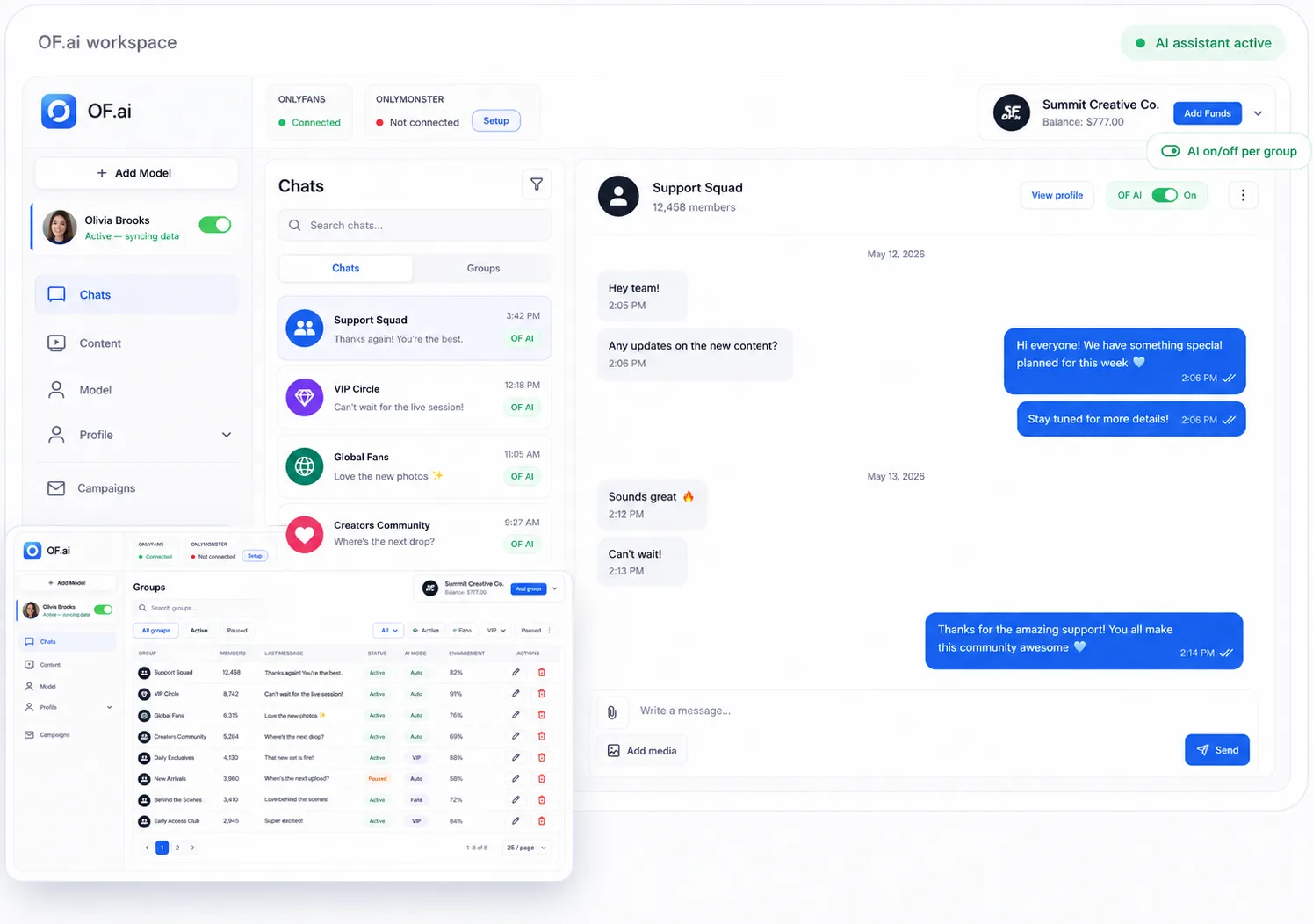
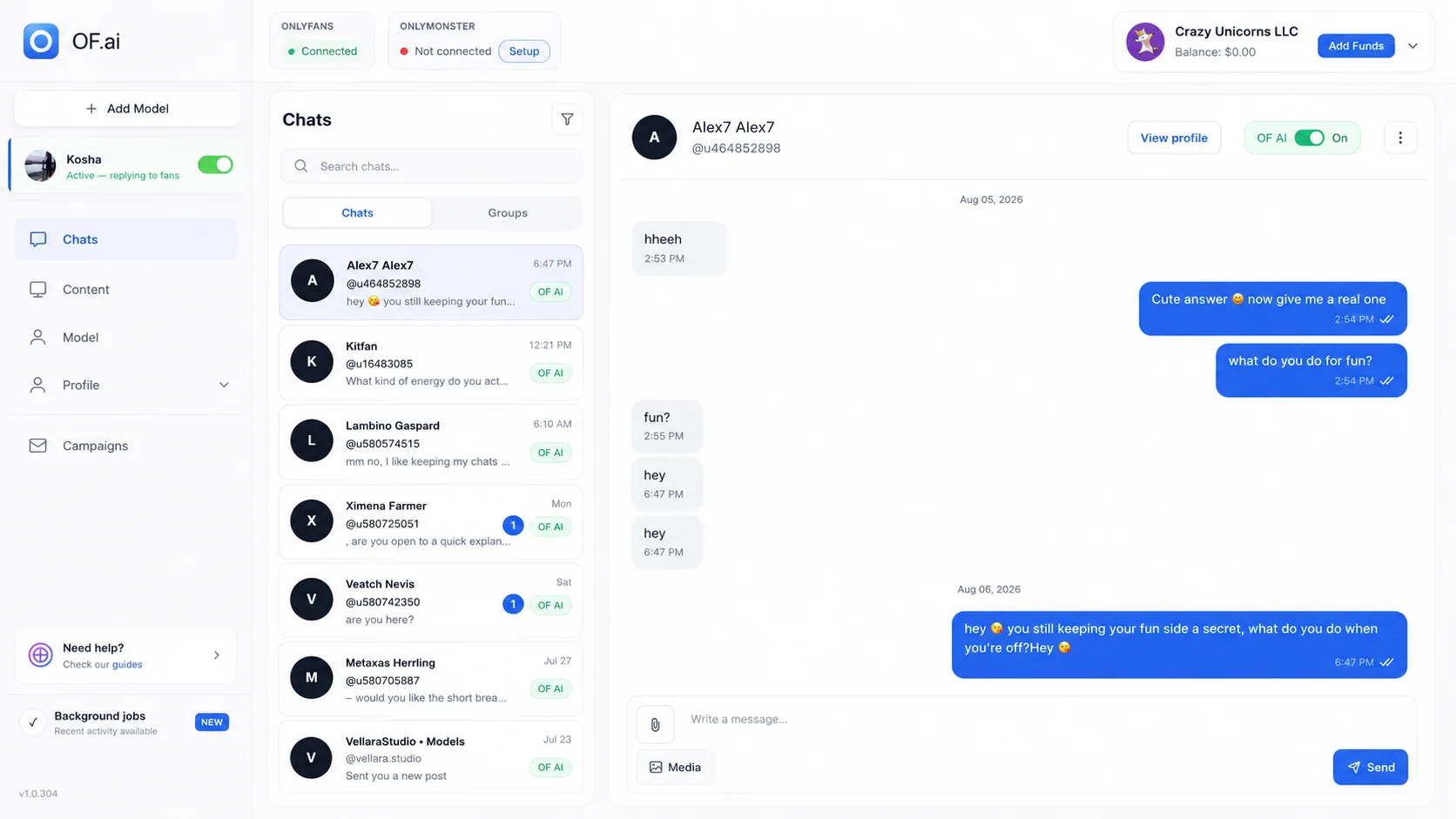
Software can reduce repeatable operational work when the workflow is explicit enough to configure. In OF.ai that includes keeping creator-specific chat instructions, fan context, approved content, conversation stages, PPV workflows and escalation controls in the same operating layer. A team can supervise those workflows, take over a conversation and refine the rules without rebuilding the process from memory.
That can matter even when people remain central. A human operator working with organized context and governed content is a different workflow from a human operator switching between chat history, notes, folders and instructions spread across several tools.
- Repeatable conversation stages and follow-up rules
- Creator-specific persona, boundaries and approved examples
- Fan context available near the conversation
- Approved content and PPV workflow support
- Review, escalation and human takeover controls
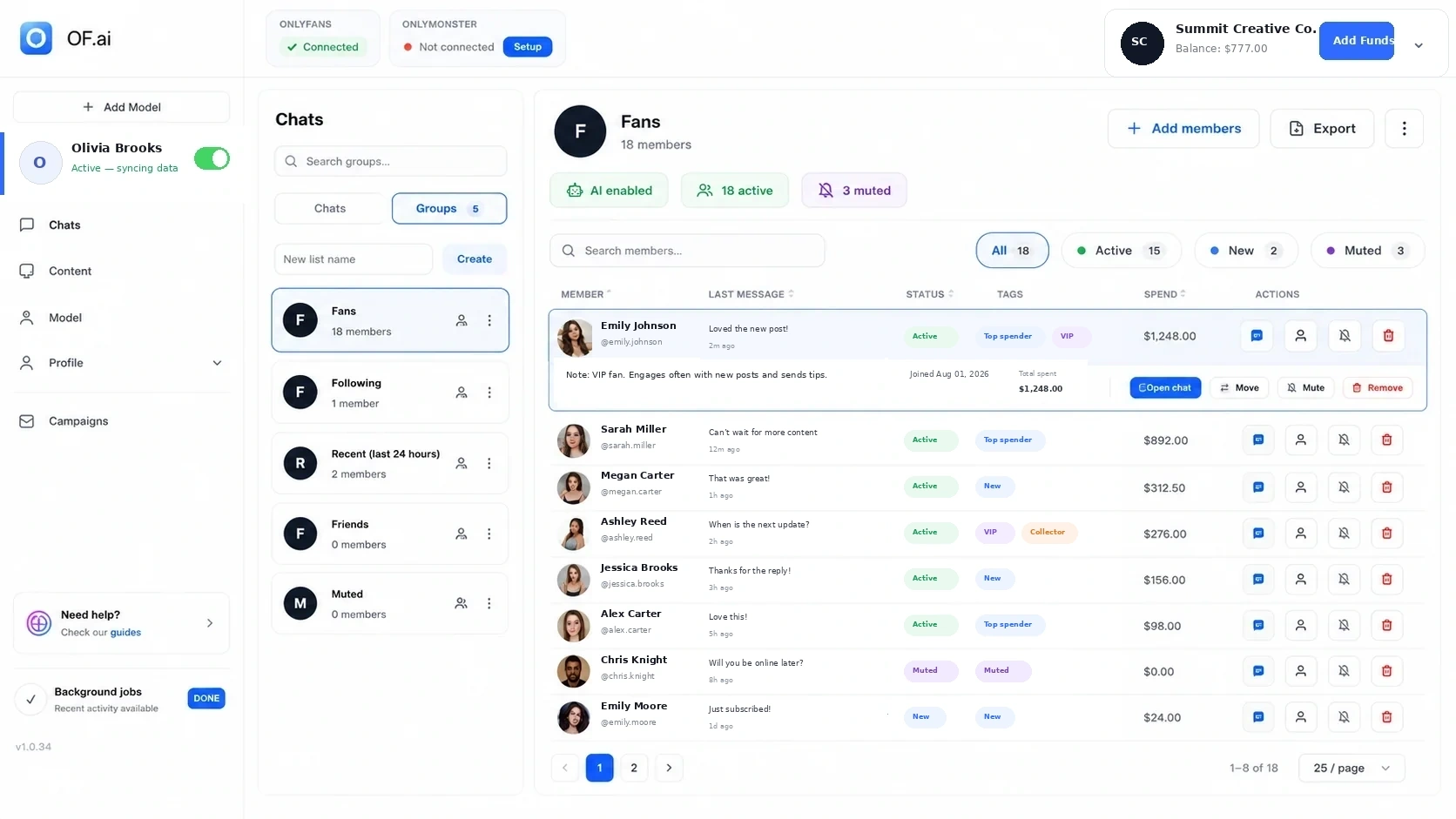
- Multi-model separation for agency operations
What Software Does Not Replace
Software does not become a full-service agency merely because it automates part of the operation. Someone still owns creator strategy, account decisions, content creation, sensitive conversations, exceptions, platform and contractual review, and the management choices around staffing and growth. Depending on the business, those owners may be the creator, an internal team, an external agency or a mix.
Make those human responsibilities visible in the plan. Otherwise a software purchase can look inexpensive only because the comparison quietly assigns unpaid management work back to the creator.
Agency, Software or Hybrid: Three Different Operating Models
None of these models wins for every creator. A creator who wants to delegate management may value service ownership more than tooling. An experienced internal team may want software because it already has the people and needs a more efficient operating layer. A hybrid can make sense when the goal is to remove repetitive work without giving up an existing human relationship or internal expertise.
| Operating model | Who runs the work | Where software fits |
|---|---|---|
| Agency-led | An external team owns the services defined in the agreement. | Software may be invisible to the creator or chosen by the agency. |
| Software-led in-house | The creator or internal team owns operations. | Software structures chat, context, content and selected automation. |
| Hybrid | An internal or external team keeps judgement-heavy responsibilities. | Software handles configured repeatable stages and shared operating context. |
How to Compare the Economics Without Inventing a Universal ROI
Use your own current numbers. Record the agency services you actually receive, internal management time, chatter or operator workload, software subscriptions, content operations and the cost of QA or corrections. Then build the alternative model with the responsibilities that would move back in-house after a switch. Do not compare an all-in service bill with a software seat while excluding the people required to run the software-led model.
Commercial outcomes belong in the comparison too, but keep the definitions stable. If one period counts a sale, retained fan or answered conversation differently from another, the spreadsheet can create a gain that the operation did not.
Questions to Ask an Agency Before You Switch
These questions make the software comparison fairer because they expose the service work hidden behind the agency line item. They also identify assets and processes that need to be transferred before a pilot can reproduce the current workflow.
- Which responsibilities and deliverables are actually included in the agreement?
- Who owns fan context, conversation history, playbooks and content organization if the relationship ends?
- How are chat quality, handoffs, escalations and creator-specific boundaries reviewed?
- Which tools does the team use, and can you export the operational data you need?
- What work would return to you or your team if you moved to a software-led model?
Run a Side-by-Side Pilot Before Changing the Whole Operation
Choose one creator and a bounded workflow that can be measured without disrupting the whole business. Keep the current process available, configure the software workflow, and track operator time, corrections, takeover rate, handoff quality, coverage and the commercial measures you already use. Include the human work that remains outside the tool.
At the end of the pilot, decide whether the software-led or hybrid model solved the specific problem that started the comparison. If it did, widen the scope deliberately. If it did not, you still learned which part of the current agency or team process is providing value that the software setup did not reproduce.
FAQ
Is OnlyFans software the same thing as an OnlyFans agency?
No. Software provides tools and configured workflows. An agency may provide people, management and services defined by its agreement. Compare the responsibilities you need, not just the billing model.
Can software replace an agency completely?
That depends on what the agency currently does and what you are prepared to own internally. Chat workflow software can reduce repeatable operational work, but broader creator management, strategy, content production and judgement-heavy decisions still need clear human owners.
Is software cheaper than an agency?
A subscription can have a lower visible line item while still requiring internal staffing and management. Compare the full operating model: services received, people required, supervision, other tools and the workflow that remains manual.
When does an in-house software model make sense?
It is worth evaluating when you already want to own operations and need a structured layer for chat, fan context, content, automation and team control. A pilot can show whether the tool reduces the work that motivated the change.
Can an agency use OF.ai instead of being replaced by it?
Yes. A hybrid model is a valid use case: an agency or internal team can keep service and judgement-heavy responsibilities while using software for configured repeatable workflows and shared context.
What should I measure in an agency-versus-software pilot?
Track the workload that moves, the workload that remains, corrections, handoffs, review time, coverage and the commercial metrics your team already uses. Keep the definitions consistent with the pre-pilot baseline.
Should I cancel an agency before testing software?
A controlled overlap gives you a cleaner comparison when contracts and operations permit it. Test one bounded workflow first so the switch decision is based on observed workload and control rather than on a feature list alone.
AI Chatter for OnlyFans.
Start free. Stay free.
Let AI chat with your fans 24/7 using your persona and tone of voice. Keep human control and upgrade only when you want AI selling. Free on the first model of your account; additional models use AI Sexter.