OnlyFans Chatter Cost: Measure the Full Conversation Workflow
There is no single chatter rate that describes the real cost of a creator's chat operation. Direct compensation is only one line. Coverage, management, recruiting, creator-specific training, QA, content lookup, access administration, handoffs and replacement work can all consume time or money. Build the baseline from your own operation first; then compare a human-led, supervised-AI or hybrid workflow using the same creator, workload and quality standard.
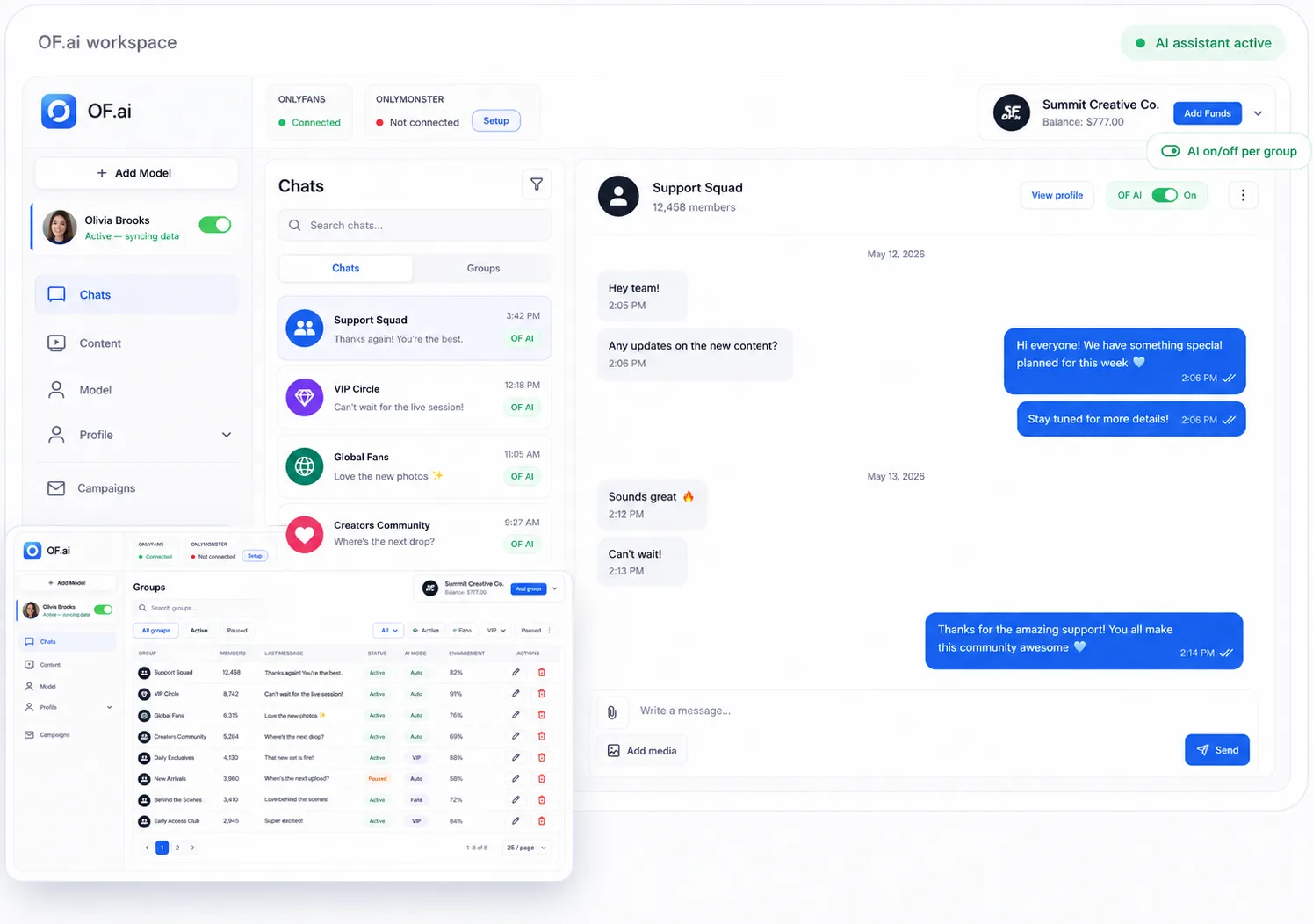
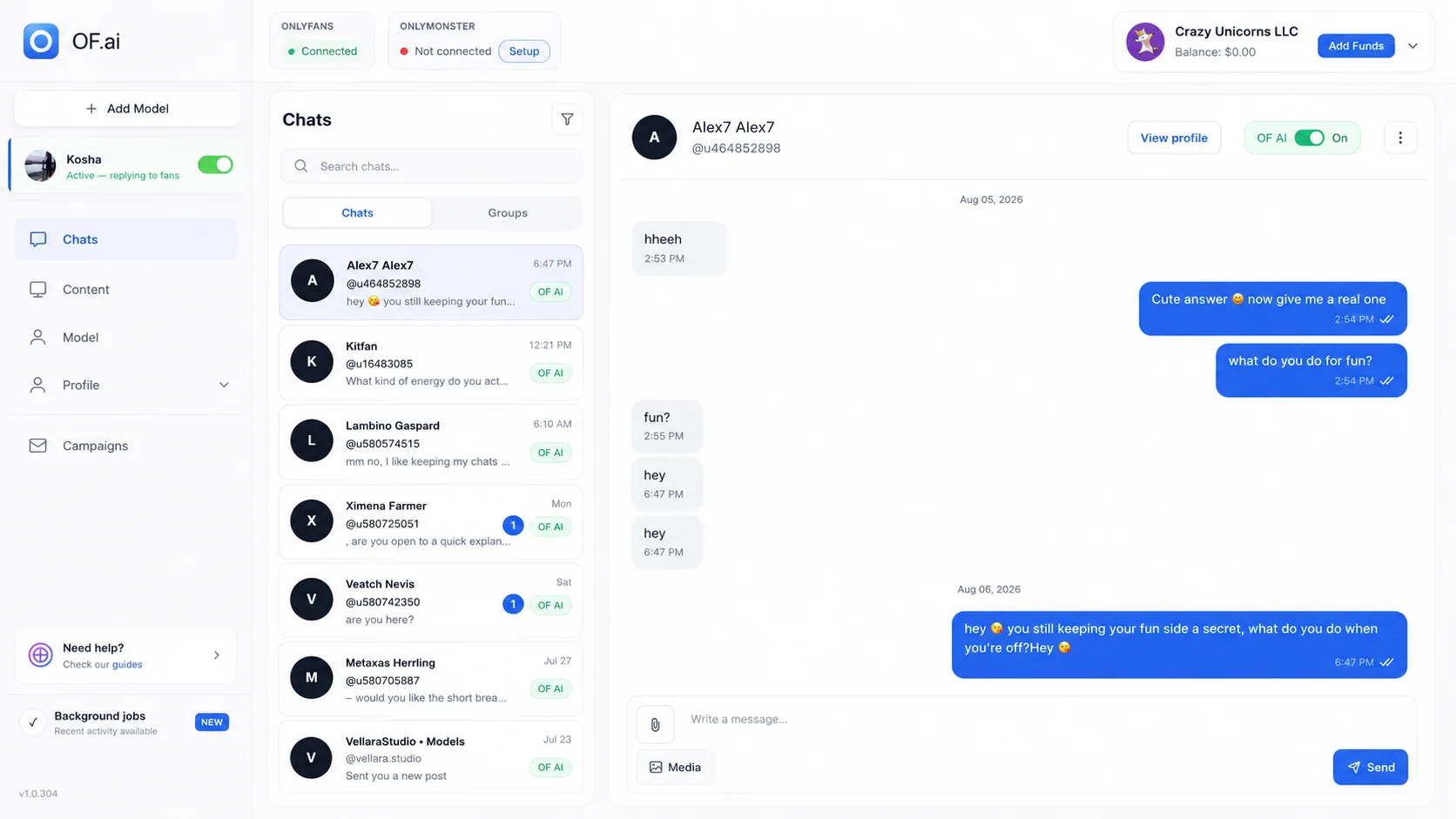
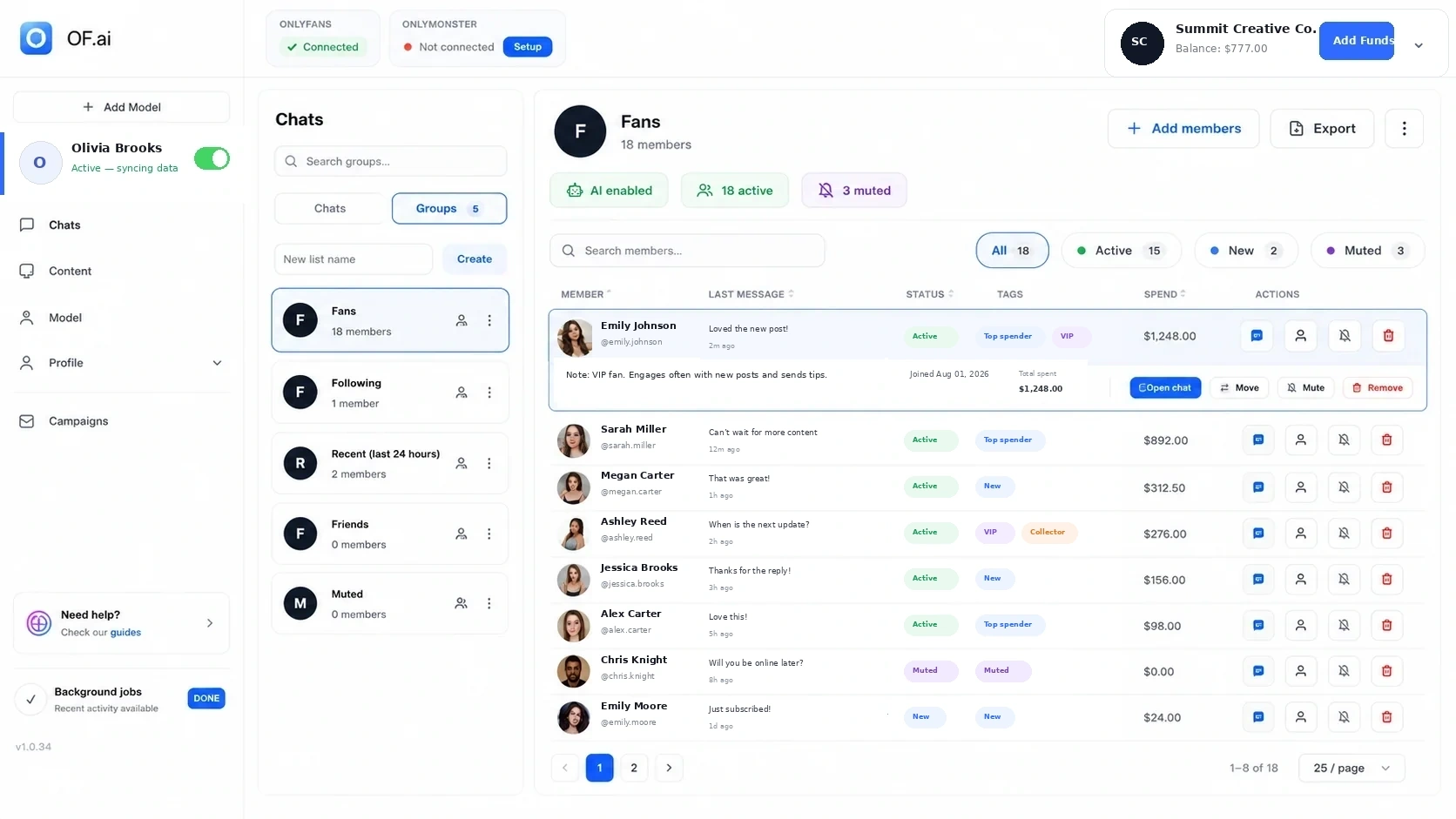
- Use your own payroll, contractor, agency and software numbers instead of a generic market rate.
- Include supervision, QA, coverage, content lookup and handoff work in the baseline.
- Compare human, supervised-AI and hybrid workflows on the same model before calling one cheaper.
What Belongs in a Chatter Cost Baseline
Start with the direct amount paid for chat work, then add the operating work required to make that chat reliable. A low headline rate can become a more expensive process when managers spend significant time correcting conversations, replacing people, covering shifts, updating instructions or finding the right creator content.
Use actual records where possible: payroll or invoices, manager time, tool bills, recruiting effort and hours spent on QA or recovery. Estimates are useful when clearly labeled, but they should not be confused with observed cost.
- Direct chatter compensation or agency chat-service fees
- Recruiting, onboarding and replacement work
- Creator-specific training, playbooks and updates
- Supervisor, QA and escalation time
- Coverage planning and handoff work
- Chat, content, CRM and reporting tools
- Access administration and offboarding
Separate Coverage Cost from Quality Cost
Coverage answers whether somebody or something is available to handle the workflow when needed. Quality cost answers how much work is required to make the resulting conversations acceptable. They are related, but combining them too early hides why one model is expensive.
For example, adding more human coverage can create more training and handoff work; expanding automation can create more review or exception work if the configuration is immature. Record those separately so the team can see whether the cost problem comes from availability, quality, management or the workflow itself.
Use Your Own Numbers Instead of a Universal Chatter Rate
Compensation and service pricing vary with location, experience, schedule, responsibilities, language, payment model and what the provider includes. A public average cannot tell you what your operation costs. Use the current quotes, payroll, contractor invoices or agency agreement available to your business.
Normalize alternatives to the same scope. If one quote includes management and backup coverage while another is only direct labor, they are not comparable until the missing responsibilities have an owner and a cost in the model.
Compare Human, AI-Assisted and Hybrid Work on the Same Model
| Cost area | Human-led | Supervised AI | Hybrid |
|---|---|---|---|
| Direct operation | Compensation or service fee for people doing chat work. | Software plus configuration and the human review the team keeps. | People and software are each scoped to selected stages. |
| Management | Scheduling, training, QA, handoffs and exceptions. | Configuration, QA, corrections, exception handling and rule updates. | Management covers both boundaries and the handoff between them. |
| Coverage | Depends on staffing plan and backup coverage. | Depends on system availability, integrations and the stages allowed to run. | Software can cover selected repeatable work while people own defined periods or cases. |
| Quality recovery | Coaching, rework, escalation or replacement. | Corrections, takeover, rule changes and incident review. | Recovery cost depends on which side owned the failed stage. |
| Scaling the roster | Measure added people, management and coordination work. | Measure added seats, configuration, review and exception work. | Measure which responsibilities grow with models and which remain shared. |
Do Not Turn a Cost Delta into an ROI Claim
If an alternative lowers operating cost, that difference is a cost delta. It is not automatically profit and it does not prove the conversation outcome stayed the same. Measure quality and commercial outcomes separately using definitions that do not change between the baseline and the pilot.
The same caution applies when an alternative costs more. Extra cost can be justified only if the creator values the added coverage, control, quality or measured outcome enough to pay for it. Keep those decisions separate from the arithmetic so the spreadsheet does not decide what the business should value.
A Practical Chatter-Cost Pilot
Choose one model, define a representative workflow and record a baseline period. Capture direct cost and management time, then run the alternative with the same quality rules. Record review, corrections, takeovers, handoffs and any work that moved to another person or tool instead of disappearing.
At the end, compare total operating cost and the quality scorecard together. If the new workflow reduced one cost but created another, the model should show that. Expand only when the team can explain where the difference came from and why it should persist on the next model.
FAQ
How much does an OnlyFans chatter cost?
There is no universal rate that is useful for every creator. Use current payroll, contractor or agency quotes for your operation, then add management, QA, coverage, tools, recruiting, handoffs and replacement work to get a total-cost baseline.
What hidden chatter costs should I include?
Commonly missed work includes recruiting, onboarding, creator-specific training, supervisor time, quality review, escalation, backup coverage, handoffs, access administration and the software used around chat.
Is AI chat cheaper than hiring chatters?
Do not assume that from a subscription line. Compare the complete workflows, including software, configuration, review, corrections and human exception handling on the automation side and management overhead on the human side.
How do I compare an agency quote with in-house chatters?
List what the agency fee includes, then price the same responsibilities in the in-house model: staffing, management, coverage, QA, recruiting, tools and replacement work. Compare the same scope rather than two headline rates.
Should I include manager time in chatter cost?
Yes if that time exists because of the chat operation. Track scheduling, QA, escalations, coaching, corrections and workflow updates so a lower direct rate does not hide more management work.
What should I measure besides cost?
Use a quality scorecard alongside cost: corrections, takeovers, context failures, boundary errors, handoff quality and the commercial measures your team already uses consistently.
Next step
Build a One-Model Cost Baseline and Pilot
Connect one model, keep human review on, and test this workflow against your own baseline.