AI vs Human OnlyFans Chatter: Compare the Workflow, Not the Hype
The useful choice is not 'AI or people forever.' It is which parts of the chat operation need human judgement, which repeatable parts can run under configured rules, and how much review the team wants to keep. Human chatters, supervised AI, and hybrid operations create different costs and control points. Compare them on the same creator, the same conversations, and the same quality standard before deciding which operating model to expand.
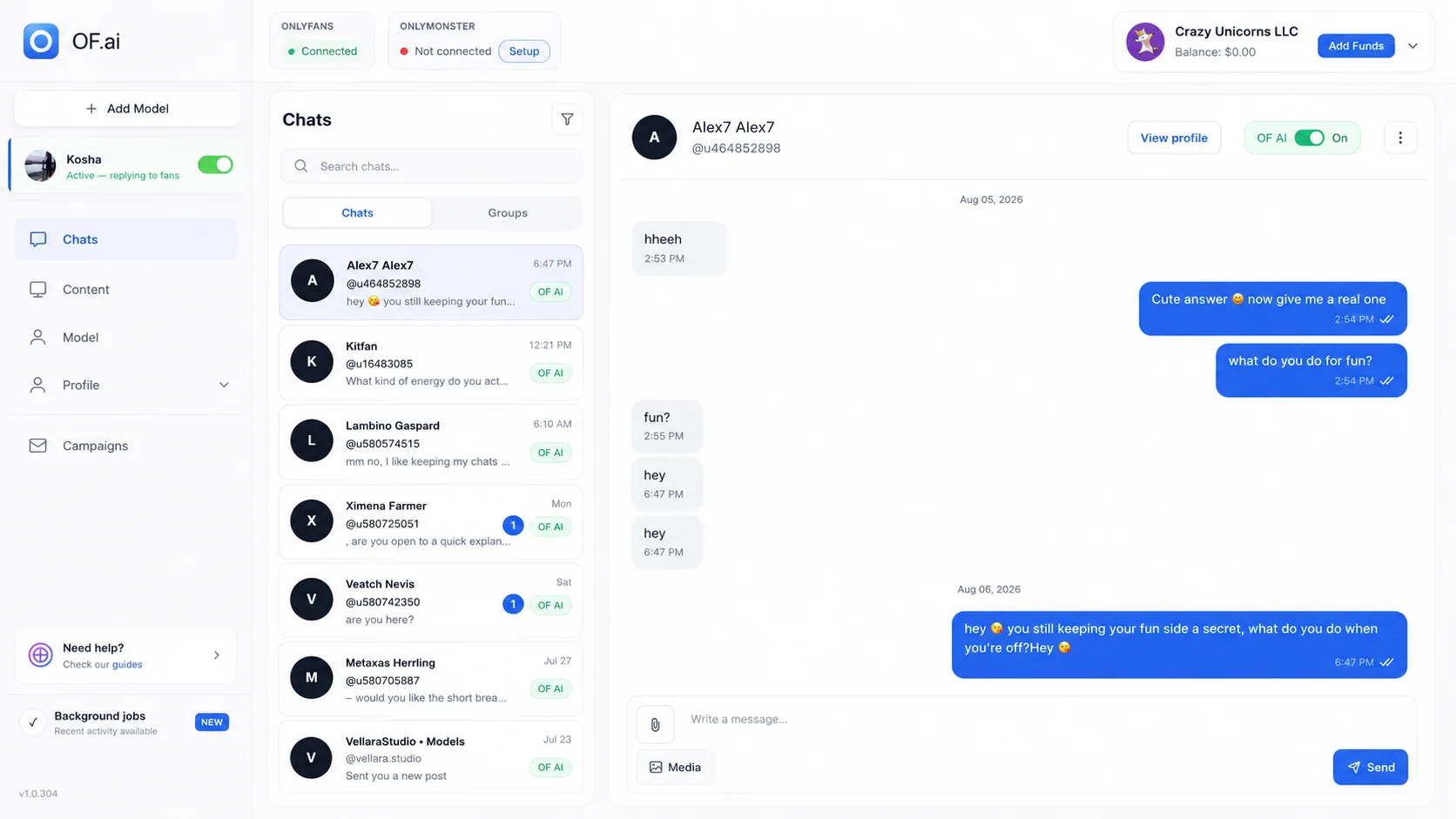
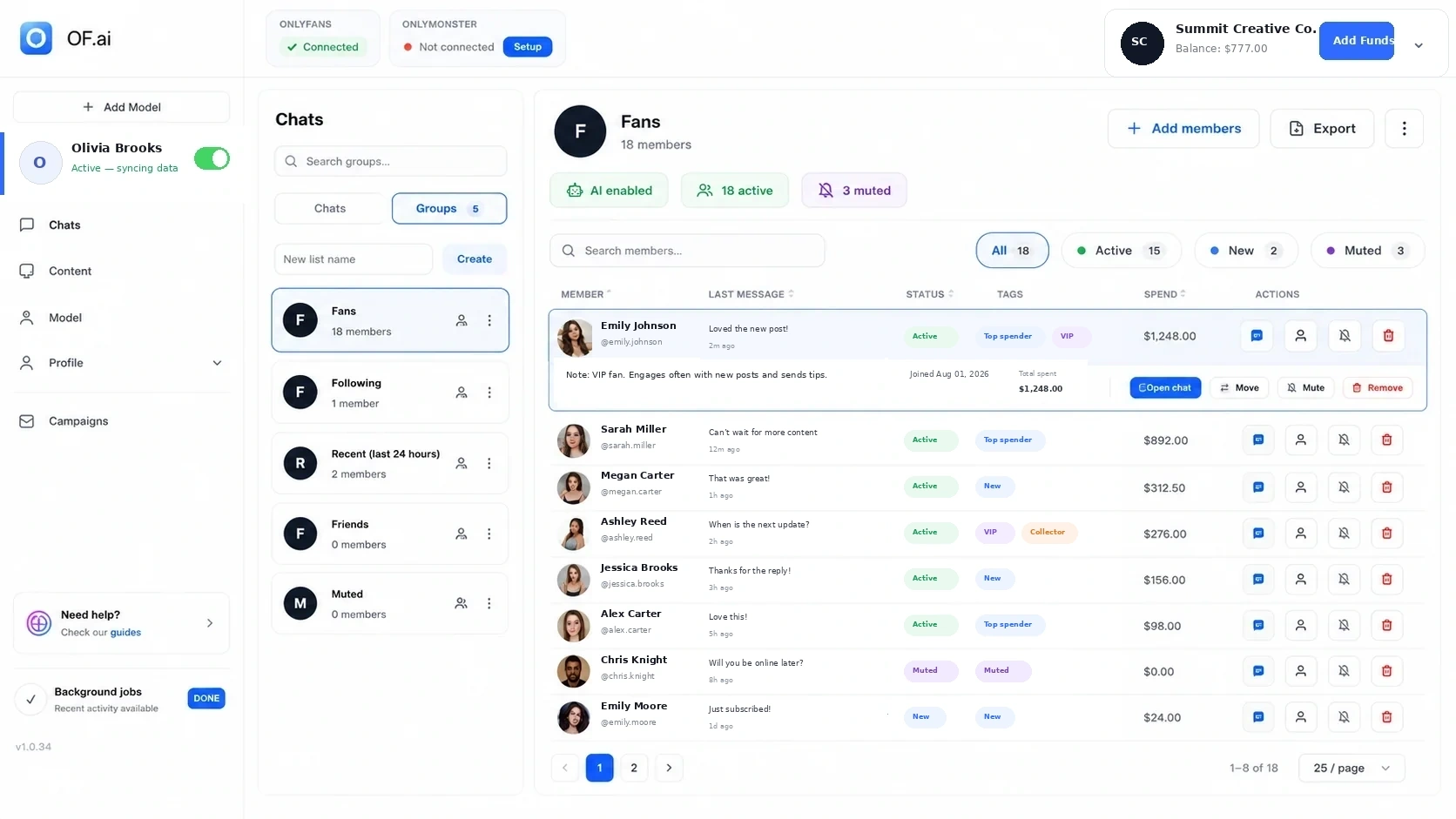
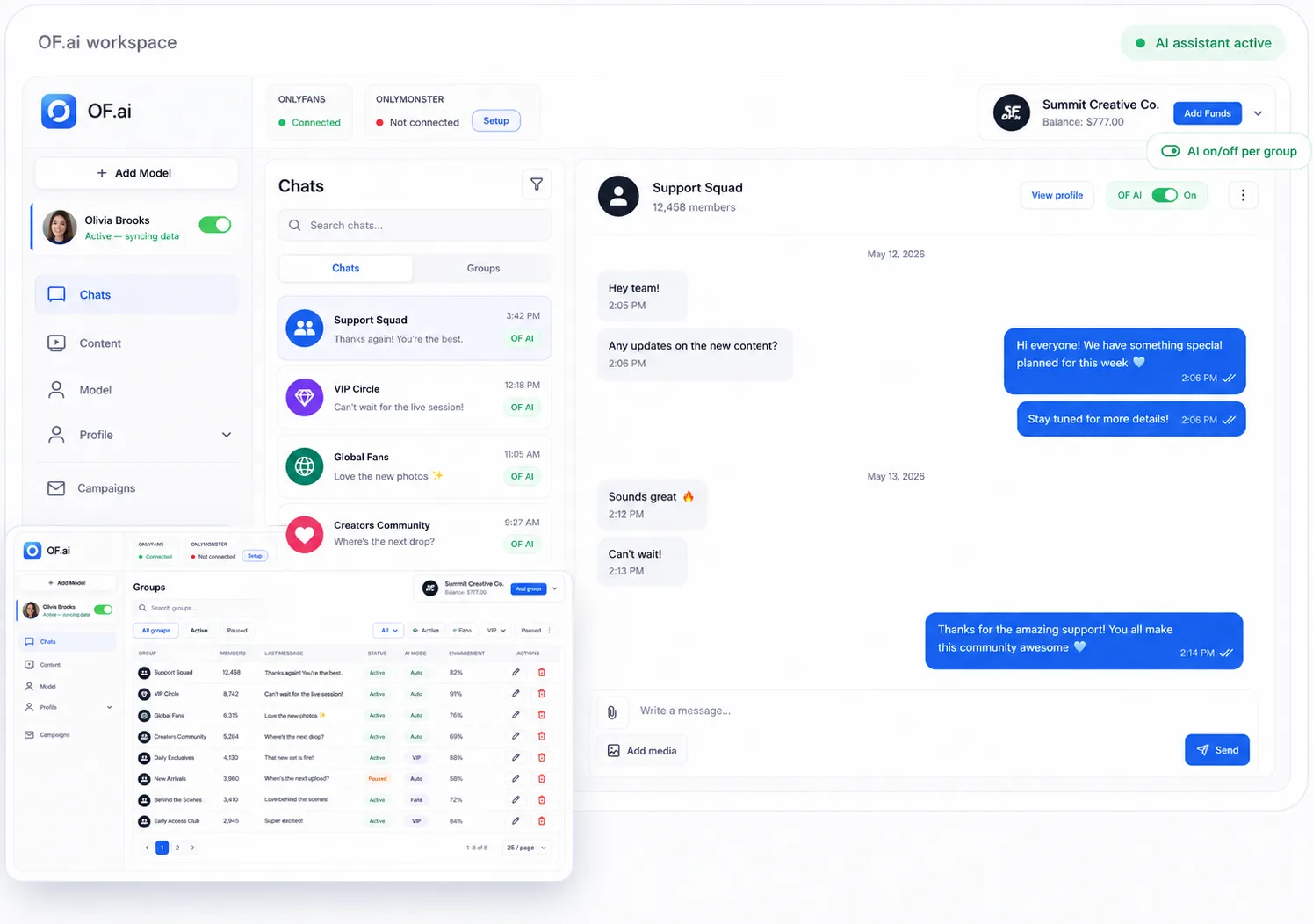
- Compare three operating models: human-led, supervised AI, and hybrid.
- Measure review, correction, takeover, context and handoff work instead of assuming one side is universally better.
- Run the same bounded workflow on one model before changing staffing or automation scope.
Three Operating Models, Not Two
A human-led workflow puts the operator at the center of every message. A supervised-AI workflow lets configured stages handle repeatable work while people review, escalate or take over. A hybrid workflow keeps judgement-heavy conversations human while using automation for narrower tasks such as routine follow-up, approved content delivery or structured conversation stages.
These models can coexist inside one agency. A creator may keep high-context conversations human, automate repeatable welcome or follow-up stages, and change the boundary over time as the team gathers evidence. Treat the boundary as a configuration decision, not an ideology about people versus software.
Where Human Chatters Still Matter
People remain useful when the conversation depends on judgement that is difficult to reduce to stable rules: unusual requests, emotionally sensitive situations, creator-specific exceptions, ambiguous context, negotiation, complaints, or a moment where the team simply wants a person to own the decision.
Human work also includes managing the system around the conversation. Someone defines boundaries, reviews quality, updates instructions, approves content, investigates mistakes and decides what should remain human-only. Automation can change that workload, but it does not make responsibility disappear.
- Sensitive or unusual conversations that need judgement
- Exceptions to creator rules or commercial boundaries
- Quality review and recovery after a poor interaction
- Creator strategy, tone decisions and policy interpretation
- Escalations where the team wants accountable human ownership
Where Supervised AI Can Reduce Repeatable Work
AI assistance is most useful when the team can describe the task clearly enough to configure and review it. In OF.ai, conversation stages can use creator-specific instructions, fan context, approved content and workflow rules, with human takeover available from the same operating layer.
That can reduce repeated lookup and drafting work, but the result should be measured rather than assumed. Track which stages run without correction, which conversations need takeover, where context was missing, and whether the review effort is lower than the work the automation was meant to remove.
Human vs Supervised AI vs Hybrid: What Actually Changes
| Decision area | Human-led | Supervised AI | Hybrid |
|---|---|---|---|
| Message decision | Operator decides each send. | Configured stages can act within rules; people review or take over where required. | Human ownership is reserved for selected conversations or stages. |
| Creator context | Depends on training, notes and operator lookup. | Configured persona, fan context and approved content can stay close to the workflow. | Shared software context supports both automated and human stages. |
| Exceptions | Handled directly by the operator. | Need escalation, review or takeover rules. | Routed to people by design for selected cases. |
| Consistency | Depends on team process, documentation and QA. | Rules can make repeatable stages more consistent, while model output still needs monitoring. | Automation handles narrow repeatable work; people handle selected judgement-heavy work. |
| Operating cost | Includes compensation, management, recruiting, tools and coverage. | Includes software, configuration, review, corrections and human exception handling. | Includes both, but each is scoped to the work it actually performs. |
Compare Quality Without Pretending It Is One Number
Conversation quality has several dimensions: whether the message fits the creator, whether it uses the right context, whether it respects boundaries, whether the next step makes sense, and whether the team has to repair the interaction later. A single response-time or revenue number cannot tell you all of that.
Choose a small scorecard before the test. Review the same kinds of conversations across the alternatives and keep the definitions fixed. If the team changes what counts as an error halfway through, the comparison becomes a story rather than a measurement.
- Corrections required before or after send
- Human takeovers and why they happened
- Context or content lookup failures
- Boundary or tone errors
- Handoff quality between people and automation
- Commercial measures the team already uses consistently
Run the Same Conversations Through a Controlled Pilot
Start with one creator and a bounded workflow. Capture the human-led baseline first, then configure the supervised workflow and keep the same measurement definitions. Record operator time, review time, corrections, takeovers, context problems and the commercial measures you already trust.
Decide in advance what result would justify expanding the automated scope and what result would stop the test. The outcome may be more automation, a smaller automation boundary, or a hybrid that keeps particular conversations human. Any of those can be the right answer when it is based on the creator's actual operation.
FAQ
Is AI better than a human OnlyFans chatter?
There is no useful universal answer. Human, supervised-AI, and hybrid workflows put judgement, review and operating work in different places. Compare them on the same creator and the same quality standard before changing the operating model.
Can AI replace every OnlyFans conversation?
A team should not assume that. Keep human takeover and escalation available, and define conversations or situations that remain human-only when judgement, sensitivity or creator preference requires it.
Where can AI help a chatter team?
It is most useful for repeatable work that can be expressed as configured stages, creator instructions, approved content and clear escalation rules. Measure correction and takeover load to see whether the workflow is actually reducing work.
What should I measure in an AI-versus-human test?
Track operator time, review time, corrections, takeovers, context failures, handoffs, boundary errors and the commercial measures your team already uses. Keep the definitions stable across the comparison.
Is a hybrid chatter workflow a temporary step?
It can be a permanent operating model. Some teams may prefer automation for narrow repeatable stages and human ownership for selected fans, exceptions or judgement-heavy conversations.
How many creators should I test first?
One creator gives a cleaner first comparison because it limits differences in tone, audience and workflow. Expand only after the team understands which rules, review steps and exception paths worked for that model.
Next step
Test One Creator Workflow Side by Side
Connect one model, keep human review on, and test this workflow against your own baseline.