OnlyFans Fan Retention: Build Re-Engagement From Observable Signals
Retention is not a prediction problem first. It is an operating problem: which fans received the experience you intended, which observable signals changed, what follow-up was allowed, and whether a comparable cohort stayed engaged or subscribed. OF.ai can keep available fan context, tags, conversation history, approved content, and follow-up rules close to the chat workflow while your team measures what actually happens.
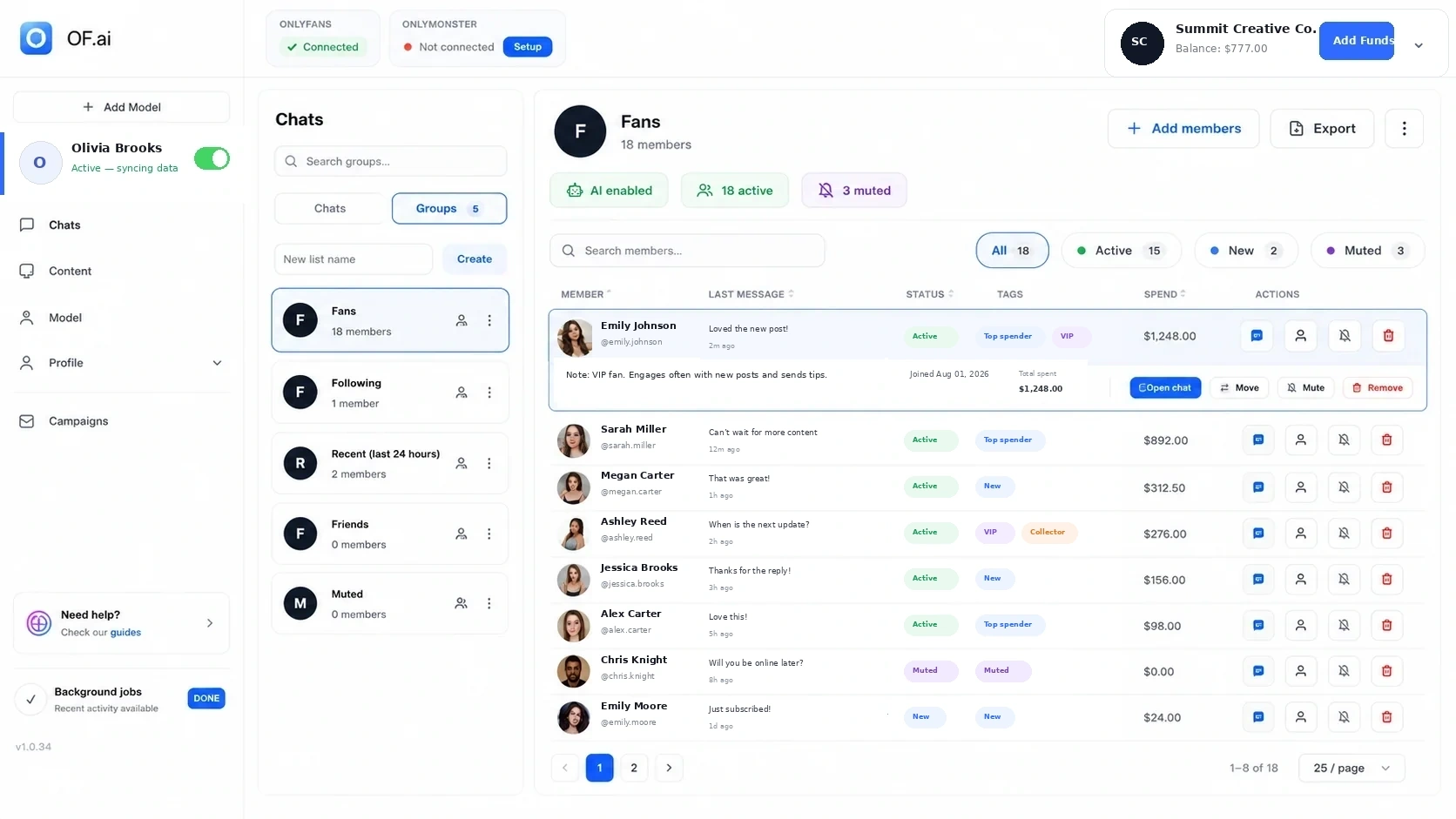
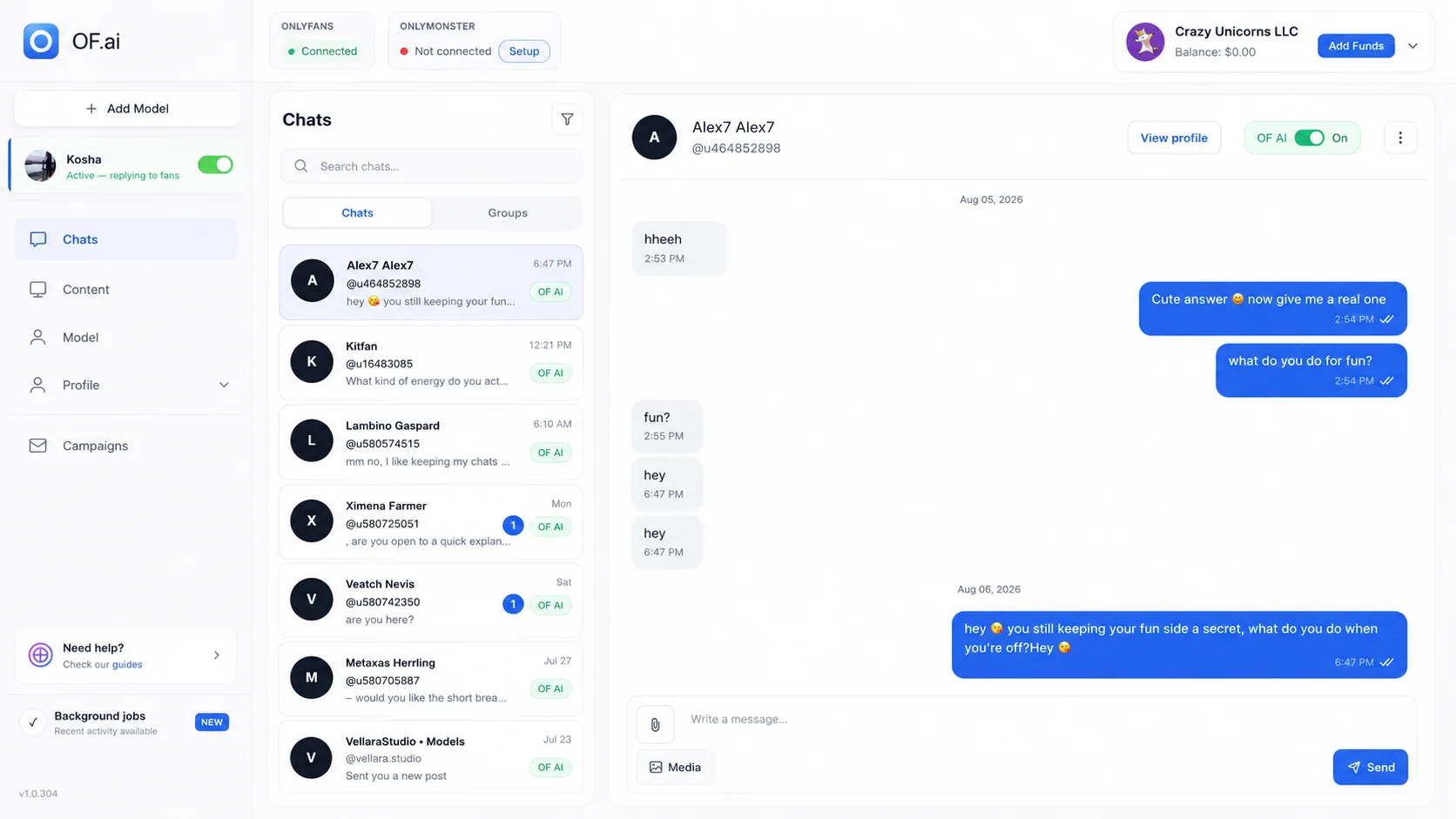
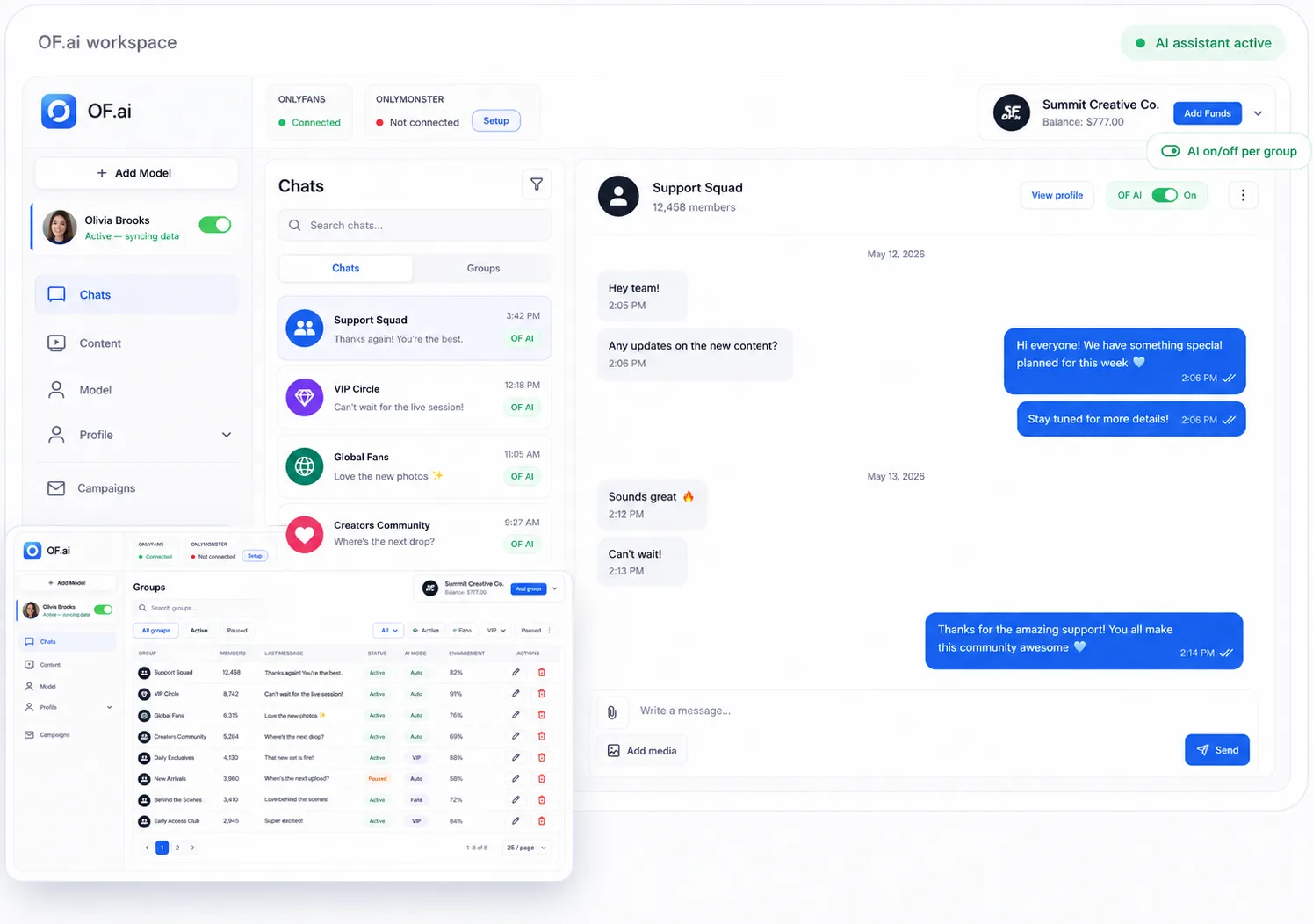
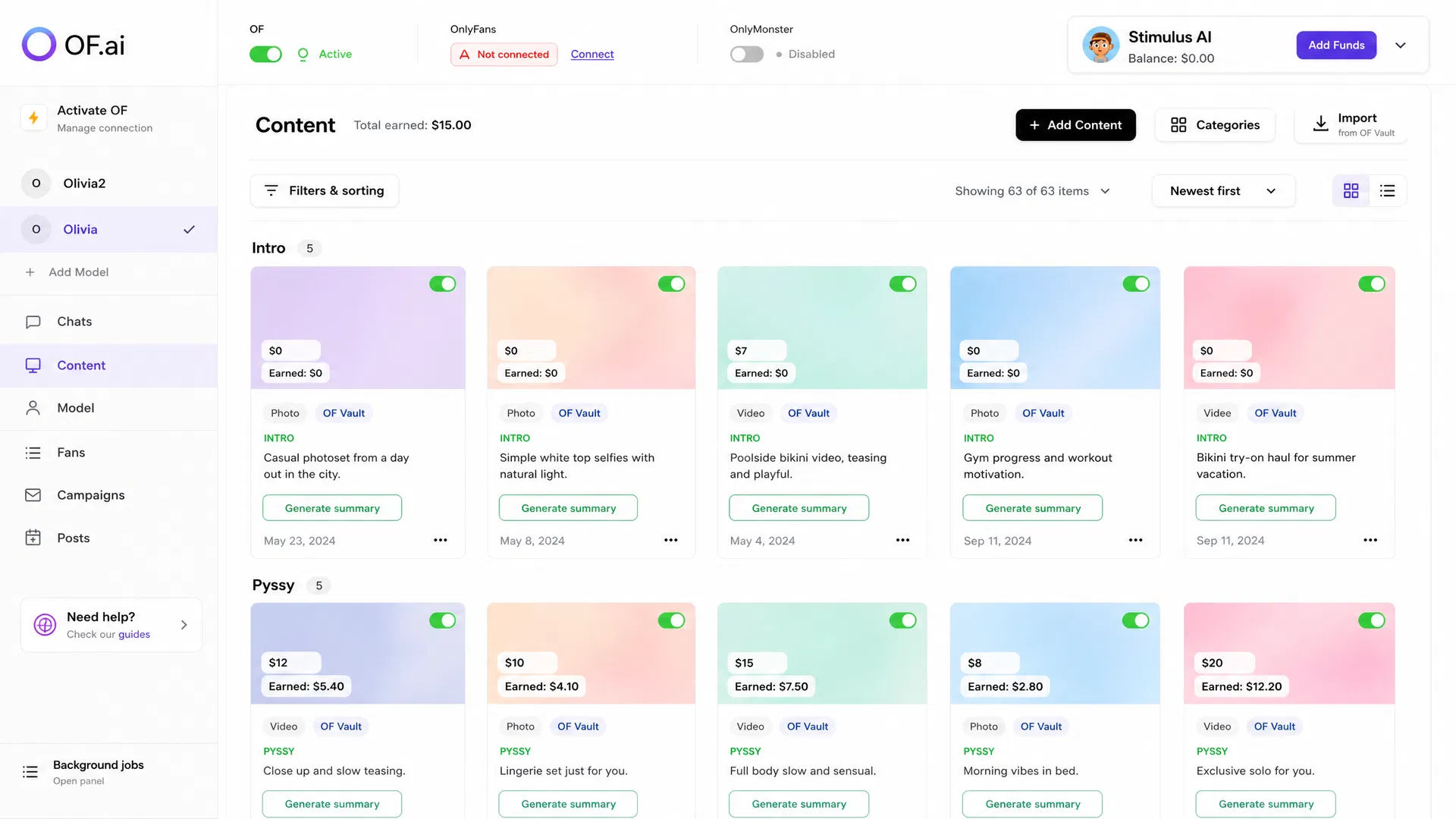
- Use observable activity and explicit fan context instead of pretending to know why somebody may cancel.
- Define re-engagement rules by cohort, stage, and known context before a message is sent.
- Keep human review for sensitive, ambiguous, or high-judgement retention conversations.
- Compare the same retention cohort definitions before and during a one-model pilot.
Retention Starts With a Cohort, Not a Churn Score
A useful retention question is specific: among fans who started in the same period or entered the same observable workflow state, how many remained subscribed or active at the next checkpoints? That is different from assigning a hidden intent to an individual fan.
Choose cohorts that your data can reproduce. Examples include subscription start period, recent conversation activity, known purchase history, explicit tag, or whether a configured follow-up was sent. Keep the cohort rule stable while you test the workflow so the result is interpretable.
- New subscribers from the same signup period
- Fans with or without a first conversation within a defined window
- Fans with known purchase activity versus no recorded purchase activity
- Fans placed in an explicit segment by an operator or configured rule
- Fans who received the tested follow-up versus a comparable baseline cohort
Separate Observable Signals From Interpretation
Message recency, reply history, stated preferences, available purchases, explicit tags, and known subscription events can be useful workflow inputs when they are actually present. They do not prove motivation. A quieter fan may be busy, satisfied, price-sensitive, disengaged, or simply using the platform differently.
Show missing context as missing. If your team adds an interpretation such as 'needs follow-up', keep it distinguishable from the underlying observation so operators know what is measured and what is judgement.
| Input | Observable fact | Do not assume |
|---|---|---|
| Conversation activity | Last available message, reply, or thread activity | Why the fan became quieter |
| Purchase context | Recorded purchase or no recorded purchase in the available data | Future spending intent |
| Fan note or tag | An explicit operator note, fan statement, or configured label | That the label remains true forever |
| Subscription event | Known start, renewal, or cancellation event when available | The reason behind the event |
| Content interaction | A recorded interaction exposed by the supported integration | A guaranteed preference or next purchase |
Four Retention Workflows You Can Test Independently
| Workflow | Trigger | Control |
|---|---|---|
| New-subscriber follow-up | Known new subscription plus configured elapsed time | Creator tone, approved welcome content, frequency limit, and manual stop |
| Conversation re-engagement | Explicit inactivity rule based on available thread activity | Do not infer a reason; use approved copy and suppress when context is sensitive |
| Post-purchase follow-up | Known purchase event in the available context | Use the recorded item and configured timing; do not predict the next purchase |
| Manual segment follow-up | Operator-created tag or explicit segment rule | The team owns the segment definition, message rule, exclusions, and review policy |
Re-Engagement Needs Frequency and Stop Rules
More follow-up is not automatically better retention. Define how often a workflow can contact the same fan, which events suppress the next message, when a fan becomes manual-only, and when an operator must review the thread. The goal is a bounded workflow the team can inspect, not an endless sequence that optimizes for message volume.
Keep content and offer authority explicit. A retention workflow can reference approved content and configured offers, but missing price, eligibility, or creator-specific guidance should cause a stop or review instead of a guess.
- Maximum follow-up frequency per workflow
- Suppression after a reply, purchase, sensitive topic, or manual takeover
- Creator-specific boundaries and approved content
- Human review for ambiguous context or unusual requests
- A visible reason when the workflow stops or escalates
Measure Retention With Cohorts, Not Before-and-After Stories
A single before-and-after number can mix seasonality, content changes, price changes, promotion sources, and different fan populations. Use cohorts with the same definitions and record other meaningful changes during the test. If possible, compare the tested workflow with a similar baseline period or a group that did not receive the change.
Retention is only one outcome. Also measure the operating cost of the workflow: messages sent, replies, review minutes, corrections, manual takeovers, suppression events, and any complaints or quality issues the team tracks. A workflow that slightly changes a retention metric but creates heavy review work may not be the right operating choice.
| Measure | Definition to lock | Why it matters |
|---|---|---|
| Cohort retention | Same cohort start rule and checkpoint | Prevents moving the denominator between comparisons |
| Re-engagement reply rate | Same eligible fan rule and follow-up window | Shows whether the workflow creates conversation, not why |
| Purchase outcome | Same attribution window and recorded purchase definition | Separates observed commercial outcome from intent prediction |
| Review workload | Minutes plus correction and takeover definitions | Captures the human cost hidden behind automation |
| Suppression / exception rate | Same stop-rule definitions | Shows how often the workflow correctly declines to act automatically |
Use Fan Context to Improve Continuity, Not to Invent Motives
Retention conversations benefit from continuity. Available conversation history, explicit fan statements, approved notes, known purchases, and creator-specific content can help the next reply avoid repeating questions or making an irrelevant offer. That context should stay close to the thread so an operator can verify it.
Context is not a psychological profile. Do not convert a few events into certainty about loyalty, spending capacity, cancellation intent, or personal circumstances. When the next step requires judgement, route it to a person with the source context visible.
Run a One-Model Retention Pilot
Choose one creator and one retention workflow rather than changing welcomes, re-engagement, offers, and segmentation at the same time. Record the baseline cohort definitions and operating workload, configure the rules, then review early conversations closely enough to see missing-context and frequency problems.
Expand only if the workflow is understandable: the eligible cohort is reproducible, messages stay inside creator rules, exceptions reach human review, and the measured retention or engagement outcome is worth the added operating work.
| Pilot signal | Record before | Compare during pilot |
|---|---|---|
| Eligible cohort | Exact rule and fan count | Same rule and any exclusions |
| Follow-up activity | Current manual messages and timing | Automated/assisted messages, suppression, and replies |
| Quality | Current corrections or complaints if tracked | Corrections, review notes, and human takeovers |
| Retention checkpoint | Baseline cohort outcome at the chosen checkpoint | Test cohort outcome using the same checkpoint |
| Operating cost | Operator and manager time | Review minutes, exception work, and tool cost |
FAQ
How can I improve OnlyFans fan retention?
Start with a reproducible cohort and a specific workflow you can control, such as new-subscriber follow-up or conversation re-engagement. Use observable context, creator-approved rules, frequency limits, human review, and the same retention checkpoint before judging the result.
Can AI tell which fan will cancel?
Do not treat that as a known fact. Software can organize observable activity and configured segments, but quieter behavior does not reveal a fan's motive or future action with certainty. Keep predictions, if used at all, clearly labeled and validate them separately.
What fan signals are safe to use for re-engagement?
Use data that is actually available to the workflow: message recency, explicit tags or notes, known purchases, subscription events, and supported interaction data. Show missing data as missing and avoid inferring personal reasons from activity alone.
How often should I send retention messages?
There is no universal frequency. Set a creator-specific limit, define suppression after replies or sensitive events, and compare engagement plus complaints, corrections, and unsubscribes using your own baseline.
How should I measure fan retention?
Use cohorts with the same start rule and checkpoint. Record meaningful changes in pricing, content, acquisition, and workflow during the period, and count review or correction workload alongside the retention outcome.
Can a retention workflow use past purchases?
It can use recorded purchase context when that data is available, for example to avoid repeating an irrelevant offer or to trigger a configured post-purchase follow-up. A past purchase does not guarantee future intent.
Can I test retention automation on one model first?
Yes. One creator and one bounded workflow make cohort definitions, quality review, frequency problems, exceptions, and operating cost much easier to inspect before expansion.
AI Chatter for OnlyFans.
Start free. Stay free.
Let AI chat with your fans 24/7 using your persona and tone of voice. Keep human control and upgrade only when you want AI selling. Free on the first model of your account; additional models use AI Sexter.